
Best Tax Software for Seniors (2026)
Last Reviewed: June 2026 | By Sharon O’Day, Senior Advisor | Fact-checked by the Grandfolk Editorial Team





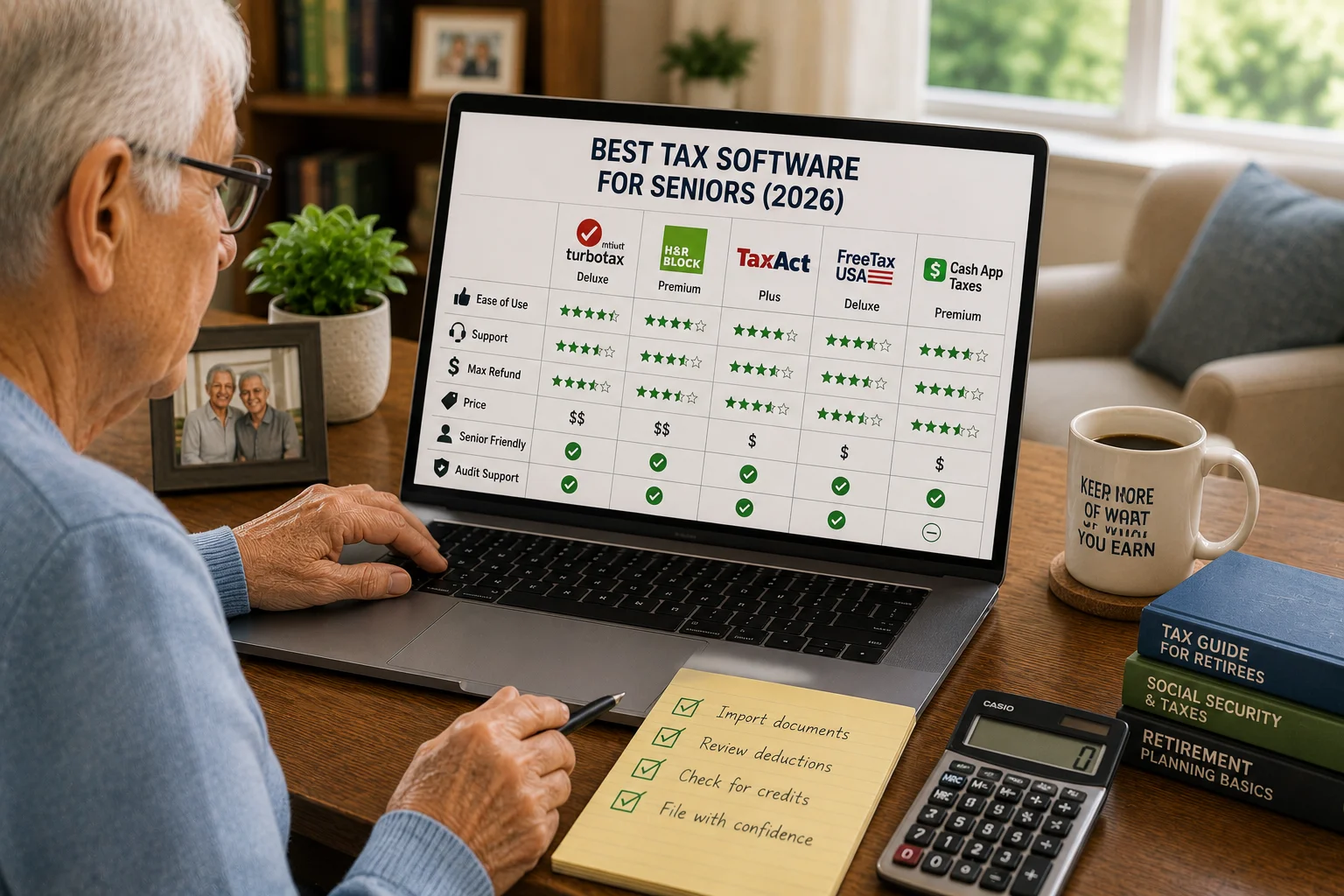
Filing taxes does not have to mean paying for help. For the 2026 filing season, most 2025 federal returns are due April 15, 2026, and many seniors can file completely free using IRS-backed programs or low-cost software. This guide explains what tax software does, the free ways to file, how the leading paid programs compare, how to pick the right one for your situation, and the tax breaks and scams that matter most for older taxpayers, including the new $6,000 senior deduction.
This article is educational and is not personalized tax advice. For complex situations, consider a credentialed tax professional or one of the free programs below.
What tax software does (and who it’s right for)
Tax software walks you through your return with plain-language questions, fills in the IRS forms for you, checks for errors and missed deductions, and lets you e-file your federal (and usually state) return. It is a good fit if your return is reasonably straightforward, for example Social Security, a pension, an IRA or 401(k) withdrawal, and some investment income. If your situation is complex (a business, rental property, or a tricky year), software with live expert help, or a professional, may be worth the cost.
Free ways to file your taxes
Before paying for anything, check whether you qualify to file free. Many seniors do.
IRS Free File
If your 2025 adjusted gross income was $89,000 or less, IRS Free File gives you free guided software from trusted partners (each partner sets its own age, income, and state rules). If your income is higher, Free File Fillable Forms let you e-file the federal forms yourself at no cost.
VITA and TCE (free in-person help)
The IRS funds two free programs: Volunteer Income Tax Assistance (VITA) and Tax Counseling for the Elderly (TCE). TCE focuses on taxpayers age 60 and older and on retirement-related questions. Find a nearby site with the IRS VITA/TCE locator.
AARP Foundation Tax-Aide
AARP Foundation Tax-Aide is the nation’s largest free, volunteer-run tax-prep service, aimed at older and low-to-moderate-income filers. You do not need to be an AARP member to use it.
A note on IRS Direct File
The IRS’s own free filing tool, Direct File, ran as a pilot in 2024 and 2025 but is not available for the 2026 filing season. If you used it before, use one of the options above instead.
The best tax software, compared
Advertiser disclosure: Grandfolk may earn a commission when you use links to some partners. Compensation never determines what we recommend. Prices change every season, so confirm current pricing on each provider’s site.
The programs below are the most widely used. The right one depends on how complex your return is and how much help you want.
| Software | Best for | Good to know |
|---|---|---|
| TurboTax | Easiest guidance and add-on live expert help | Polished interface; tends to cost more; strong import features |
| H&R Block | Online filing with the option of in-person help | Nationwide offices if you want to switch to a person partway through |
| TaxAct | Mid-priced returns with a calculation guarantee | Generally cheaper than TurboTax; watch state-return fees |
| TaxSlayer | Lower-cost paid filing for confident filers | Competitive flat pricing; lighter hand-holding |
| FreeTaxUSA | Free federal filing on most returns | Free federal even for many complex returns; low state fee |
| Cash App Taxes | Completely free federal and state | No paid tiers; fewer support options and some form limits |
Note: in-person chains like Jackson Hewitt and Liberty Tax are mainly preparer services rather than do-it-yourself software, so consider them under hire a professional below.
How to choose the right tax software
Compare these points rather than just the headline price:
- Free-tier eligibility. Many simple returns file free, so check whether yours qualifies before paying.
- State-return cost. A free federal return often comes with a separate state fee, so add it in.
- Your return’s complexity. Investment income, rentals, or self-employment may require a higher tier.
- Live help. Some programs let you add a tax pro by chat or screen-share for an extra fee.
- Watch the upsells. Free can turn paid once you add prior-year imports, audit support, or phone help, so read what’s included.
- Security. Use strong, unique passwords and two-factor authentication, since the software holds sensitive data.
Tax breaks and situations that matter most for seniors
The new $6,000 senior deduction (2025 to 2028)
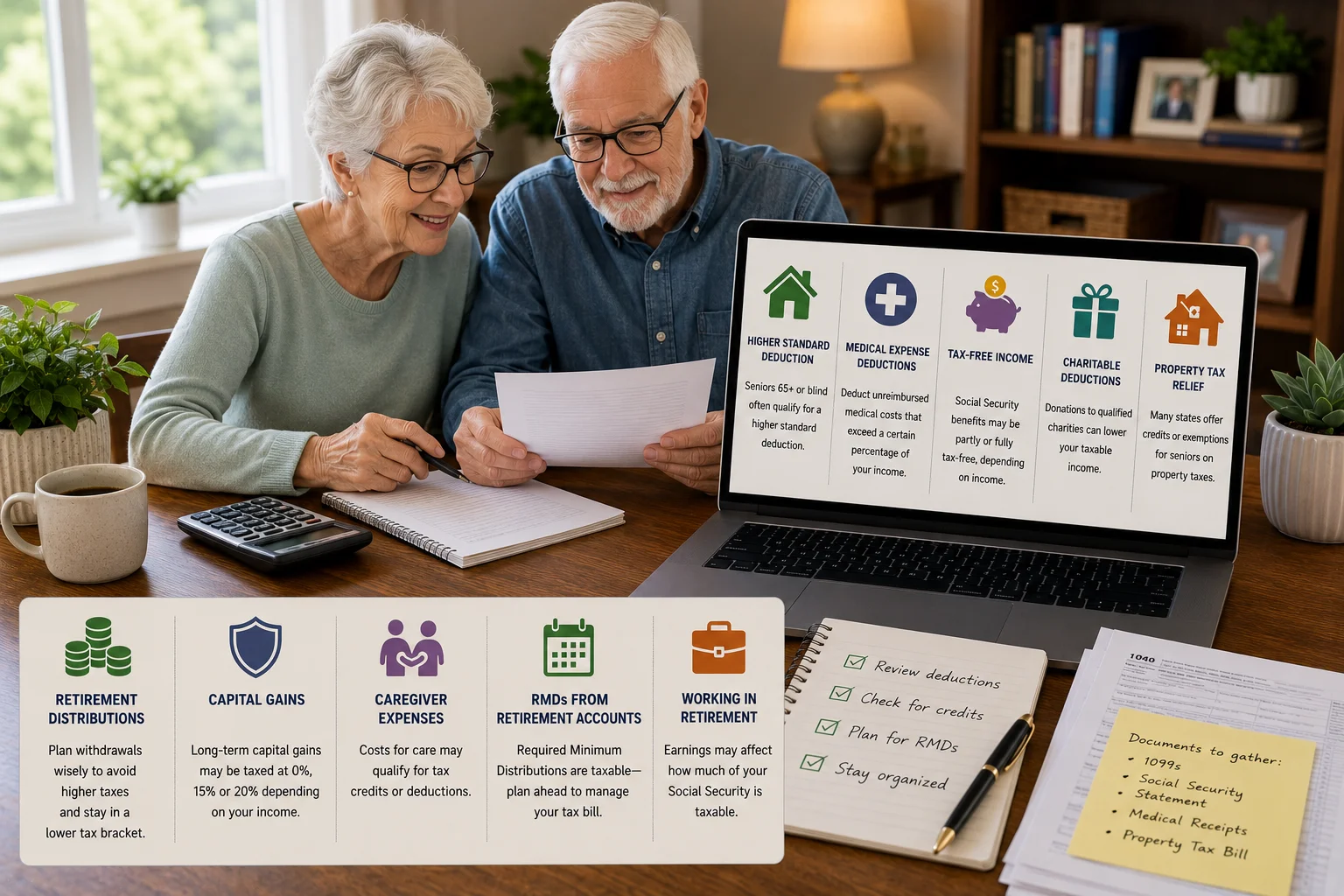
A recent law created a temporary extra $6,000 deduction for people age 65 and older ($12,000 if both spouses qualify), available for tax years 2025 through 2028. It applies whether you take the standard deduction or itemize, and it phases out for modified adjusted gross income above $75,000 (single) or $150,000 (joint). This stacks on top of the regular standard deduction and the existing additional standard deduction for those 65 and older. Good software applies it automatically if you qualify; you can confirm eligibility on the IRS website.
Social Security, RMDs, and 1099s
Common senior tax items include the taxability of Social Security benefits, required minimum distributions (RMDs) from retirement accounts, and the forms that report them, such as SSA-1099 and 1099-R. If you sold investments, you may also have capital gains to report; our guide to taxes on investment accounts can help. Reputable tax software handles these step by step.
Prefer to hire a professional? How to vet one
If your return is complex or you would simply rather not do it yourself, hire a credentialed preparer, an enrolled agent (EA), CPA, or tax attorney, who can also represent you before the IRS. Verify anyone’s credentials in the IRS Directory of Federal Tax Return Preparers, ask for fees in writing up front, and avoid anyone who bases their fee on the size of your refund. The IRS also publishes tips for choosing a tax professional.
How to avoid tax scams (ghost preparers and IRS impersonation)
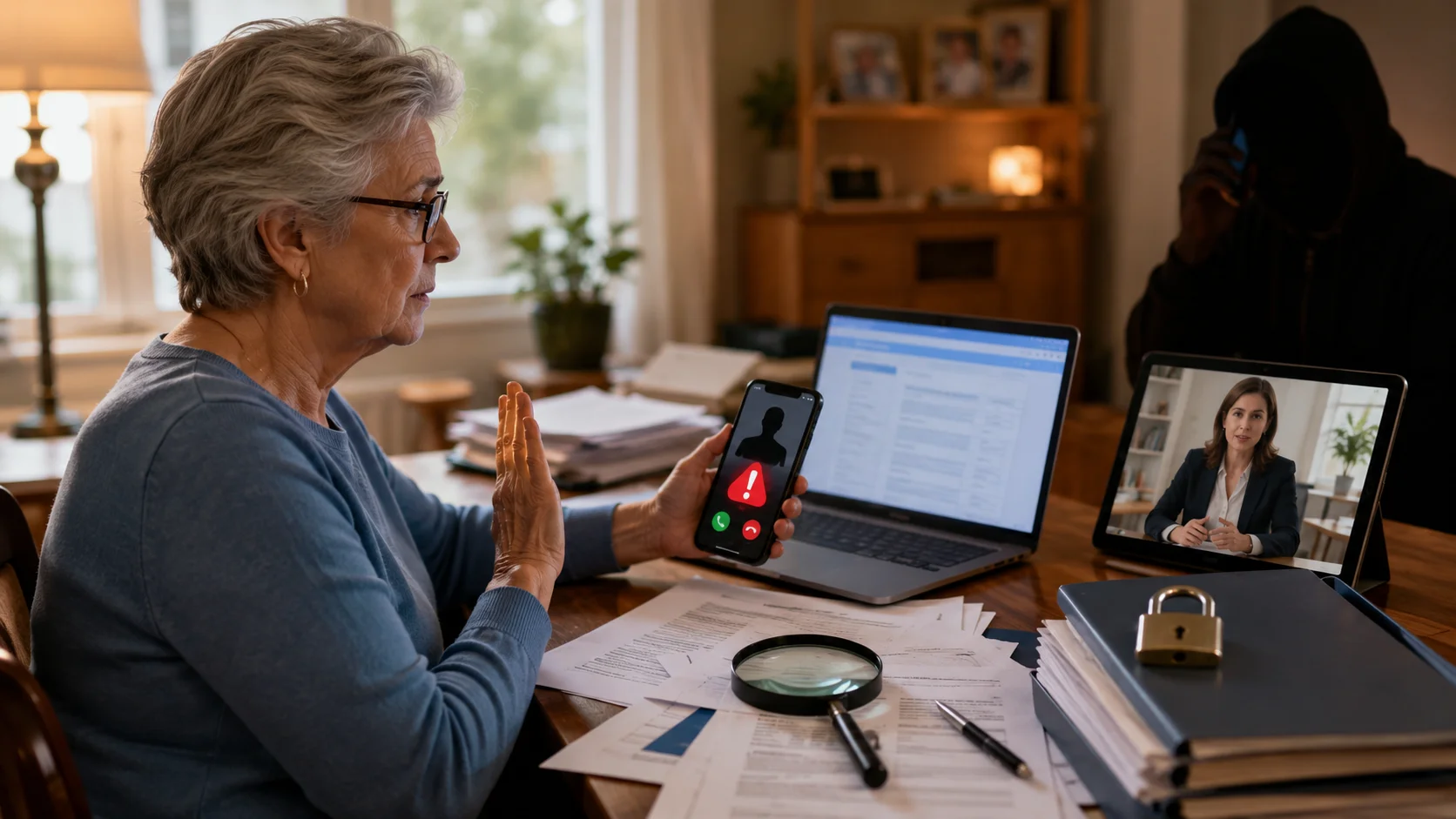
Older taxpayers are frequent targets. Two big ones to watch for:
- Ghost preparers. A paid preparer must sign your return and include their PTIN (Preparer Tax Identification Number). Anyone who prepares your return for money but refuses to sign it is a red flag, so walk away.
- IRS impersonation. The IRS will not call, email, or text you out of the blue demanding immediate payment or threatening arrest. Real IRS contact generally starts with a letter. Never share personal or banking details with an unsolicited IRS caller.
See the IRS tax-scam alerts for current schemes, and remember the IRS is phasing out paper refund checks, so file with direct deposit using your own verified bank details.
Frequently asked questions
Can seniors file their taxes for free?
Often, yes. If your 2025 adjusted gross income was $89,000 or less, IRS Free File offers free guided software. The IRS-backed VITA and TCE programs and AARP Foundation Tax-Aide also offer free help, with TCE and Tax-Aide focused on older taxpayers. (The IRS Direct File pilot is not available for the 2026 season.)
What is the best tax software for seniors?
It depends on your return. Free or low-cost options like FreeTaxUSA, Cash App Taxes, and IRS Free File suit simple returns, while TurboTax, H&R Block, TaxAct, and TaxSlayer offer more guidance and add-on live help for complex situations. Compare the free tier, state-return cost, and live-help options.
What is the new $6,000 senior deduction?
For tax years 2025 through 2028, people age 65 and older can claim an additional $6,000 deduction ($12,000 if both spouses qualify), on top of the standard or itemized deduction. It phases out for modified adjusted gross income above $75,000 (single) or $150,000 (joint). Tax software applies it automatically if you qualify.
When are 2025 taxes due?
The 2026 filing season opened January 26, 2026, and most 2025 federal returns are due April 15, 2026. Filing electronically and choosing direct deposit is the fastest way to get a refund.
Do seniors have to file a tax return?
It depends on your income, age, and filing status. Some lower-income seniors are not required to file, but filing can still be worthwhile to claim a refund or certain credits. The free programs above can tell you whether you need to file.
How can seniors avoid tax scams?
Avoid ghost preparers who won’t sign your return or include their PTIN, and never trust callers, emails, or texts claiming to be the IRS and demanding immediate payment. Verify any paid preparer in the IRS directory before sharing your information.
The bottom line
For most seniors, filing taxes in 2026 comes down to two questions: do you qualify to file free, and how much help do you want? Start by checking IRS Free File, VITA/TCE, and AARP Tax-Aide, since many older taxpayers can file at no cost. If you’d rather use paid software, match the program to your return’s complexity and watch for state fees and upsells. Take advantage of the new senior deduction if you’re eligible, file electronically with direct deposit, and stay alert to ghost preparers and fake-IRS scams.

Sharon O'Day - Senior Advisor
Sharon O'Day is the Health editor at Grandfolk, where she commissions and reviews fitness, wellness, and senior-care content for accuracy, clarity, and real-world usefulness. At 60-plus, she writes for older adults from lived experience, testing the advice against the questions she and her peers actually ask. She focuses on guidance that is honest about both the benefits and the limits, and that always points readers back to their own doctor for personal decisions.