
Best Emergency Food Supply for Seniors (2026)
Last Reviewed: June 2026 | By Sharon O’Day, Senior Advisor | Fact-checked by the Grandfolk Editorial Team





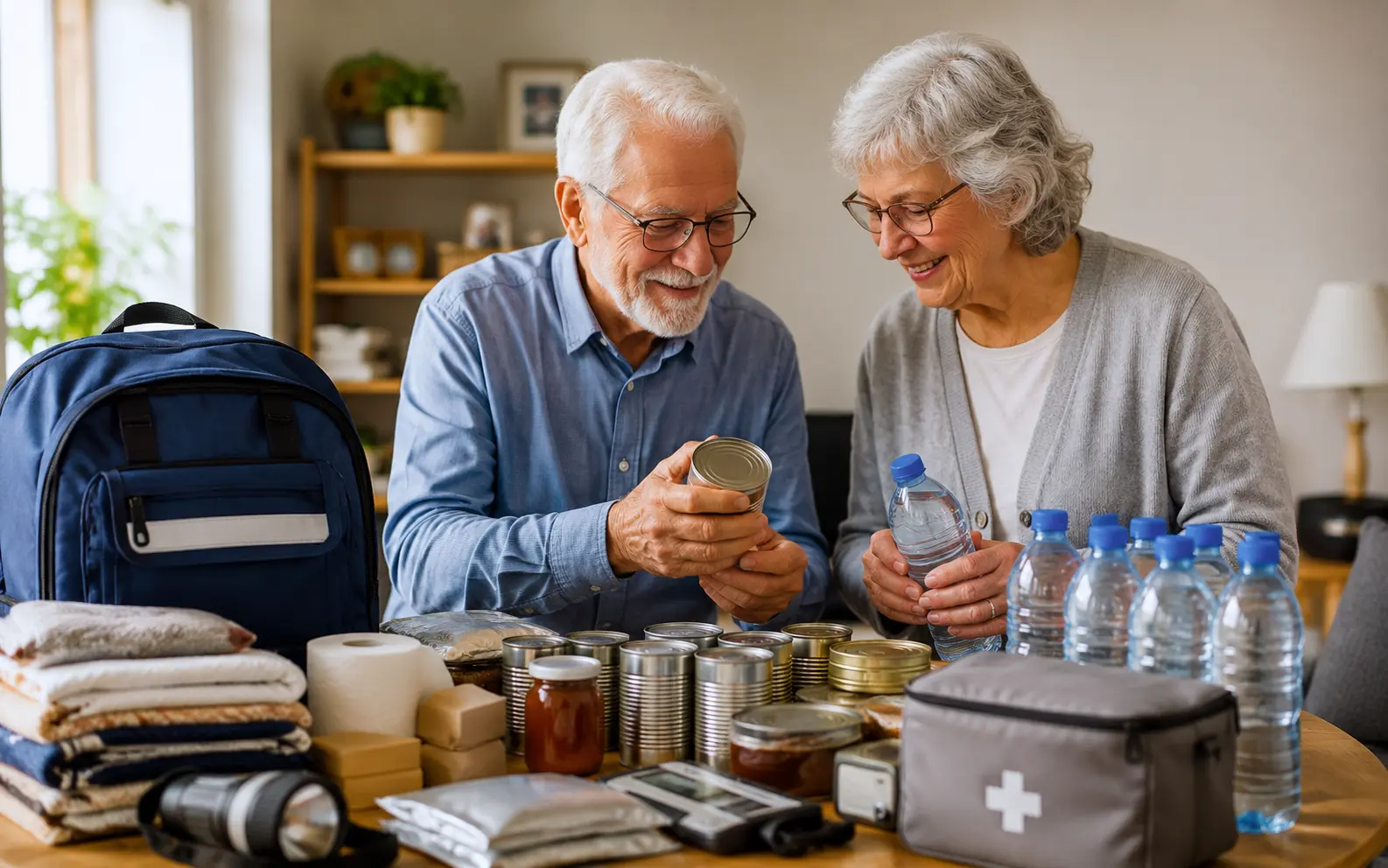
Keeping a stock of emergency food is one of the simplest ways to feel ready for a storm, a power outage, or a disruption to the stores. For older adults it carries extra weight, because fighting through a crowded store before a hurricane, or going without the right food during a long outage, is harder and riskier as we age. A little planning now removes that worry.
This guide explains how much food and water you actually need, how to read past misleading kit labels, the real difference between freeze-dried and dehydrated food, how long it truly lasts, and how to build a supply at a pace your budget can handle. It is written for seniors and for the family members helping them prepare.
At a glance: Federal guidance from Ready.gov recommends storing at least a three-day supply of non-perishable food, and FEMA suggests building toward a two-week supply at home. Store one gallon of water per person per day, and plan for roughly 2,000 calories per adult per day.
How much emergency food and water do you really need?
Start with three numbers, then build from there:
- Water: at least one gallon per person per day, for drinking and basic sanitation, per Ready.gov. A three-day supply is the minimum; aim for two weeks if you can store it.
- Calories: about 2,000 calories per adult per day as a planning figure. Women over 50 generally need 1,600 to 2,200 and men 2,000 to 2,800, depending on activity level.
- Duration: a three-day kit to start, then work toward a two-week home supply, which is what FEMA recommends for staying put after a disaster.
If a senior in the household cannot easily shop or cook during a disruption, plan more generously and lean toward foods that need no preparation. Pairing a food supply with in-home care support can help when getting out is not an option.
The servings trap: read calories, not servings

This is the most important buyer-beware point, and most shoppers miss it. Emergency kits are usually sold by servings, not by calories. A kit advertised as a three-month supply can fall far short once you do the math, because a single serving may contain as little as 250 calories. Four of those a day is only about 1,000 calories, which no adult can live on for long.
Eating well under 1,200 calories a day for an extended period leads to fatigue, trouble staying warm, and worse. So ignore the serving count. Multiply the calories you need per day by the number of days you want the supply to last, then buy that many total calories. Comparing kits by their total calorie count is the only honest way to know what you are really getting.
Freeze-dried vs dehydrated (and what lasts longer)
| Factor | Freeze-dried | Dehydrated |
|---|---|---|
| How it works | Frozen, then moisture is removed under vacuum | Warm, dry air removes moisture |
| Moisture removed | About 98 to 99 percent | About 90 to 95 percent |
| Shelf life | Longer, due to lower moisture | Shorter than freeze-dried |
| Nutrition | Keeps most vitamins and minerals (loses vitamin C) | Loses more nutrients, including vitamins A and C and some B vitamins |
| Preparation | Usually just add water | Often needs cooking or boiling |
| Cost | Higher | Lower |
For seniors, the just add water advantage of freeze-dried food matters. During a real emergency, heat and clean water for boiling may be limited, so foods that need heavy cooking are harder to rely on.
What to look for in emergency food for seniors
| What to check | Why it matters |
|---|---|
| Total calories (not servings) | The only honest measure of how long a supply lasts |
| Nutrition balance | Vitamins, minerals, and protein matter if you eat it for weeks |
| Dietary needs | Watch sodium for blood pressure, sugar for diabetes, and look for gluten-free or allergen-free options |
| Easy, no-cook preparation | Heat and water may be limited; add-water or ready-to-eat is safer |
| Container weight | Heavy buckets and cans can be hard to lift and move |
| Real shelf life | Confirm the proof behind any long shelf-life claim |
| Taste and variety | Sample packs help you avoid stocking food you will not eat |
Packaging and real shelf life
Oxygen is what makes stored food go bad, so packaging is everything. The best long-term packaging removes oxygen and keeps it out.
- 10 cans and properly sealed metal or glass offer the strongest protection and can stay oxygen-free for a very long time.
- Mylar pouches only work well when they include a foil layer. Without foil, a pouch’s shelf life can be far shorter, often closer to 5 to 15 years depending on the food and conditions.
- Oxygen absorbers and nitrogen flushing add a second layer of protection inside the package.
- HDPE buckets alone are permeable and may only protect food for about 2 to 5 years unless paired with sealed internal packaging.
Treat up to 25 years claims with healthy skepticism, and ask the seller for the basis of the figure. Store everything in a cool, dark, dry place for the best results.
Water, medications, and a way to open the cans
Food is only part of a kit. Following the Ready.gov checklist, also keep:
- Stored water (one gallon per person per day) and a backup way to treat water.
- A manual can opener A pantry of cans is useless without one during an outage.
- A supply of prescription medications. Keeping them stocked is easier with a prescription delivery service.
- A battery or hand-crank radio, a flashlight, and spare batteries.
- For anyone who lives alone, a medical alert system for help if something goes wrong.
Food safety during a power outage
Before you open your stored food, use up what is in the refrigerator and freezer safely. According to USDA food safety guidance, a refrigerator keeps food safe for about four hours if you keep the door closed, and a full freezer holds its temperature for about 48 hours (24 hours if half full). When in doubt, throw it out, and lean on your shelf-stable supply.
What it costs and how to compare fairly
Prices vary widely by brand, food type, and kit size, and freeze-dried generally costs more than dehydrated. The fair way to compare is by cost per 2,000-calorie day, not cost per serving, since servings are often too small to live on. Work out the total calories in a package, divide by 2,000 to get the number of real days it covers, then divide the price by that number. That single figure lets you compare any two products honestly.
How to avoid misleading marketing and scams

- Be wary of any kit sold by servings without a clear calorie count per serving.
- Ignore fear-based urgency and countdown timers designed to rush your decision.
- Research newer brands carefully, since this market has many new sellers of uneven quality.
- Check real reviews and return policies before a large purchase, and buy sample packs first.
- Read the terms of service to understand refunds, since you may have to ship product back at your own cost.
A simple, affordable starter plan for seniors
You do not need to buy everything at once. Build in stages:
- Week one: a three-day supply of familiar, no-cook foods plus three gallons of water per person and a manual can opener.
- Weeks two to four: extend to a two-week supply of shelf-stable staples, adding a little each shopping trip.
- Ongoing: add longer-term freeze-dried or canned reserves, and rotate stock so nothing expires unused.
Frequently asked questions
How much emergency food should a senior store?
Start with a three-day supply and build toward two weeks, which is what FEMA recommends for staying at home after a disaster. Plan for about 2,000 calories per adult per day, and count total calories rather than servings.
How much water should I store for an emergency?
Store at least one gallon per person per day for drinking and sanitation. A three-day supply is the minimum, and a two-week supply is better if you have room. People who are sick, and those in hot climates, may need more.
What is the difference between freeze-dried and dehydrated food?
Freeze-drying removes more moisture, so the food lasts longer, keeps more nutrients, and usually only needs water to prepare. Dehydrated food is cheaper but often needs cooking and does not last as long.
How long does emergency food really last?
It depends on packaging. Foil-lined Mylar pouches and #10 cans with oxygen absorbers last longest, while plain buckets or non-foil pouches last far less. Be cautious with up to 25 years claims and ask for the basis.
Is emergency food safe for seniors with diabetes or high blood pressure?
Many emergency foods are high in sodium and carbohydrates, so check labels carefully. Look for lower-sodium and lower-sugar options, and choose brands that publish full nutrition information. Ask your doctor if you are unsure.
What emergency foods need no cooking?
Canned meals, canned fish and beans, peanut butter, nut butters, crackers, granola bars, dried fruit, and freeze-dried meals that rehydrate with cool water all work without heat. Keep a manual can opener on hand.
The bottom line
A good emergency food supply for a senior is simple: enough real calories to last, water at one gallon per person per day, foods that need little or no cooking, and packaging that genuinely protects them. Compare products by calories and by cost per day, not by serving counts, build your supply in stages, and you will have steady peace of mind without overspending.

Sharon O'Day - Senior Advisor
Sharon O'Day is the Health editor at Grandfolk, where she commissions and reviews fitness, wellness, and senior-care content for accuracy, clarity, and real-world usefulness. At 60-plus, she writes for older adults from lived experience, testing the advice against the questions she and her peers actually ask. She focuses on guidance that is honest about both the benefits and the limits, and that always points readers back to their own doctor for personal decisions.