
Best Meal Delivery for Seniors in 2026
Last Reviewed: June 2026 | By Sharon O’Day, Senior Advisor| Fact-checked by the Grandfolk Editorial Team






Maybe you’re finally an empty-nester. Or you are widowed or divorced. Or perhaps you’re just plain tired of planning and shopping for dinner after doing so every night since you came home from your honeymoon 40 years ago. Thanks to technology, we finally have some new answers to that worn-out question, What’s for dinner?
We compared meal delivery options for older adults, from no-cook prepared meals to Medicare-covered programs to cook-at-home kits, on cost, effort, and who each one suits
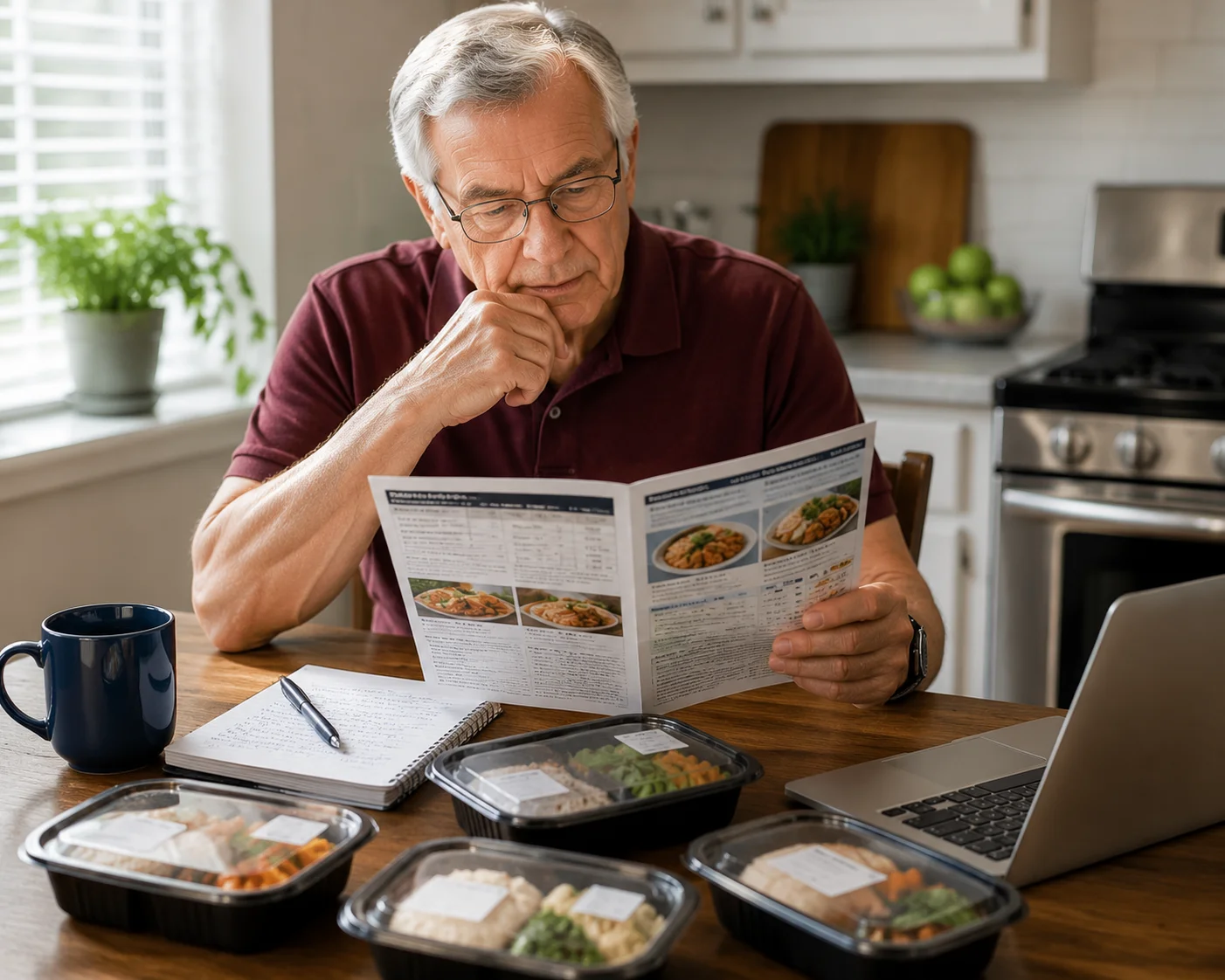
Not all “meal delivery” is the same. The right choice depends on whether you want to cook, your budget, and any health needs.
Ready-to-eat prepared meals (no cooking).
These arrive fully cooked; you simply refrigerate or freeze them and heat when ready. This is the best fit for seniors who cannot or prefer not to cook, and the category the others on this page often overlook.
Medically tailored and covered meals.
Some services provide meals designed for specific conditions (low-sodium, heart-healthy, renal-friendly, diabetic-friendly), and many are available free or low-cost through insurance (see the next section). Mom’s Meals is a common provider.
Community programs.
Meals on Wheels and similar local programs deliver meals to homebound seniors, often free or by donation, and provide a daily check-in that matters for people living alone.
Cook-at-home meal kits.
Services like HelloFresh, Home Chef, Blue Apron, and Gobble send pre-portioned ingredients and recipes. These suit seniors who enjoy cooking and want to cut planning and shopping, but they do require chopping and cooking, so they are not ideal if kitchen tasks have become difficult.
Can you get meals free or low-cost? Medicare, Medicaid, and local programs
This is the part many seniors do not realize. Original Medicare (Parts A and B) does not cover meal delivery, but many Medicare Advantage (Part C) plans do, commonly after a hospital or skilled-nursing stay (often around 10 to 14 meals) or as part of chronic-condition management, and some offer prepaid benefit cards for meals. Coverage varies by plan, so check your Summary of Benefits or call the number on your insurance card. Medicaid programs and your local Area Agency on Aging also fund home-delivered meals for those who qualify, and Meals on Wheels serves homebound seniors regardless of plan. If you do not qualify for covered meals, services like Mom’s Meals can be purchased directly at roughly $9.49 or less per meal.
Best meal delivery services for seniors: comparison
| Service | Type | Cooking required? | Notable for |
| Mom’s Meals | Ready-to-eat, medically tailored | No (heat and eat) | Often covered by Medicare Advantage/Medicaid; condition-specific menus |
| Meals on Wheels | Community program | No | Free or donation-based for homebound seniors; daily check-in |
| Silver Cuisine / Magic Kitchen (examples) | Ready-to-eat, senior-focused | No | Senior and dietary-specific prepared meals |
| HelloFresh / Home Chef | Cook-at-home kit | Yes | Variety and flexibility for seniors who cook |
| Gobble / Blue Apron | Cook-at-home kit | Yes (some quick options) | Faster prep options; established kit brands |
Best Meal Delivery Features for Seniors
Some meal delivery services are national, and some are local. One is not better than the other; what counts is that you can identify a company or individual behind the offering who can be held accountable for quality, service, and access to your credit card.
As you compare services, you want to know that the pricing they deliver fits within your budget. You want to know what recourse you have if you are dissatisfied, plus the ease or difficulty of preparing the meals. Also, consider the ease of canceling the service if you no longer want weekly shipments and the ease of reaching customer support when you need it.
How to Select Meal Delivery for Seniors
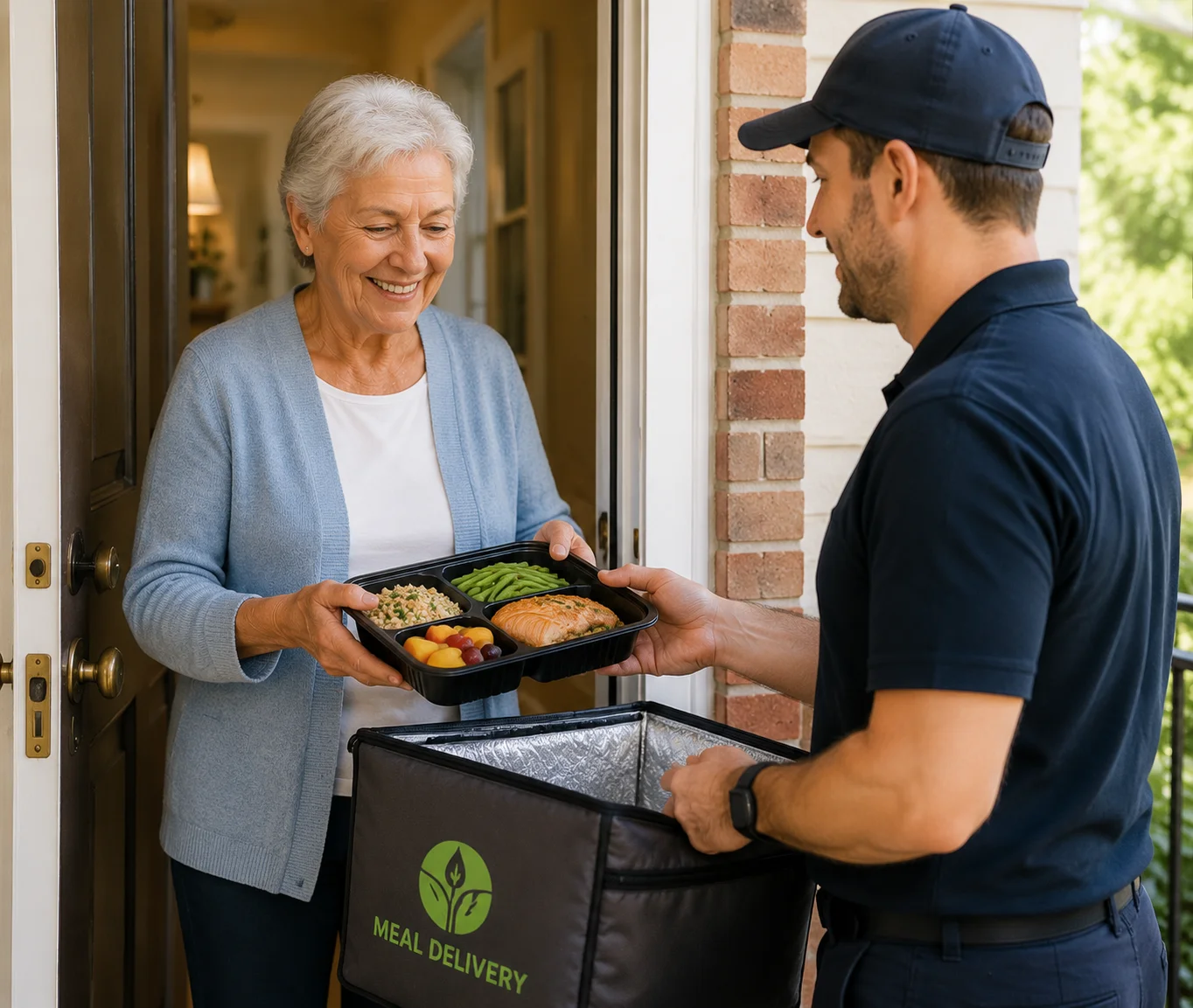
Determining exactly how much you spend for lunches and dinners now is a good place to start. Breakfasts are available through delivery services, too, but are less likely to be part of your order. That calculation should not consider the cost of the ingredients of meals you fixed but also everything you bought that went into the trash or garbage disposal instead.
The figure you come up with will tell you what you are replacing, although you may also decide that the time saved by not having to plan and shop has a dollar value. What cannot be measured is the value of good health if you find yourself eating healthier — or within the guidelines for some medical condition you tend to ignore.
Once you know what you can afford to pay per serving with a delivery service, you next want to realistically assess how many times per week you will prepare a purchased meal.
Different companies do different amounts of the prep work for you: some chop up everything and put all pre-measured ingredients for each meal in a separate container. Others send you all the needed vegetables mixed up, and you need to segregate what belongs to each meal before you store everything away. Some brag that their meals can be fixed in 15 minutes; others are complex and can take 45-60 minutes or more.
Many services offer meals based on plans, meaning you receive multiple meals in one delivery for a flat fee. Some require a weekly or monthly commitment and renew automatically. Others let you order when you want and only charge when you place an order.
These things may not seem important, but they will determine the resistance you will face and whether you will use and enjoy the service.
Next come your preferences: vegan, meat eater, gluten-free, organic, paleo, traditional cooking, gourmet, etc. Meal delivery companies clearly emphasize their specialty in their marketing. While most will offer a token number of meals that meet other preferences as well, you will find it easier to order on an ongoing basis if the company’s philosophy and taste align with yours.
Now, you have the basics needed to filter through the various meal delivery services available to you online.
Two areas differentiate what seniors prioritize from what younger people do: age-friendliness and health-related values.
Regarding age-friendliness, your interaction with the service will be the same regardless of age. If the company’s representatives are easy to deal with, the online selection/ordering/billing process should not be an obstacle as long as you are comfortable going online. However, you might decide to transfer that responsibility to a caretaker at some point.
The ease of meal preparation itself will possibly become an issue with advancing age. As long as you continue to take joy in preparing the meal itself, with time, those companies that do more of the cutting, chopping, and measuring will appear friendlier.
As the senior population grows, the number of ‘feeding’ solutions also grows. Meal delivery is just one solution. For example, local companies deliver ready-to-eat meals on demand or by subscription. In some areas, chefs will come into your home once a week to cook and freeze a series of individual meals, offering you direct input and companionship. In short, the friendliness of a solution depends entirely on what works for you.
As for the health-related value of meal delivery services, it is not negligible. Malnutrition is a serious issue among seniors in the U.S. and is not necessarily related only to finances. Disinterest and boredom play a role, especially for seniors living alone. The inability to get to a grocery store easily, for whatever reason, is a barrier as well.
As chronic illnesses progress, our coping ability is helped or hindered by how well we eat. Even in the early stages of the aging process, good nutrition is critical to prevent certain health conditions from developing. Eventually, once diseases become debilitating, a senior’s involvement in the actual preparation of meals may decline, and the work required to bring meal delivery services to the plate may no longer be possible.
Other Meal Delivery Considerations for Seniors
When selecting a meal delivery service, you will want to know how much variety the company offers, that is, how many recipes you can choose from each week if you sign up for a regular subscription. If that number is limited, you may repeat the same meals too often or order something you do not like. Some companies offer customization options that give you more flexibility and control. Decide how important that is to you.
Meals have to be tasty, too. We all have different tastes and preferences, which makes that judgment very personal. You can make minor changes as you prepare the meal, say dropping or adding a spice, but if you find the basic recipes are not what you are used to eating, find another company. (Just read the exact cancellation procedure if you do that.)
Since one of the key values of a meal delivery service for seniors is that it helps them eat healthily, you want to know the nutritional value of each meal. Many companies will add that information to the recipe card in the shipment; others will easily locate it on their website where you chose the dish. The selection and quality of the ingredients are also important. A meal does not have to be organic to be healthy; however, following good nutrition standards is a minimum.
Many companies have separate food plans that deal with dietary restrictions. Foods might be heart-healthy, diabetes-friendly, or gluten-free, for example. Whatever dietary restriction you have, you need full information if you control calories, fats, carbohydrates, sugars, sodium, or something else. (Of those, sodium is probably the easiest to alter, as you can salt less frequently than the recipe recommends.)
Here is the most important point: if you decide that a meal delivery service meets your need for nutritious food, matches your food-prep skills and time constraints, can be customized to your dietary restrictions, and is affordable and tasty, give it a try. Your commitment can be as short as a week, just as long as you read the fine print before ordering.
Once you find a company that supplies you with healthy food, plus the joy of easy preparation and the ability to evolve as your needs do, all that is left to say is ‘bon appétit!’
Frequently asked questions
Does Medicare cover meal delivery?
Original Medicare does not cover meals, but many Medicare Advantage plans offer home-delivered meal benefits, often after a hospital stay or for managing a chronic condition. Check your plan’s Summary of Benefits or call the number on your insurance card. Medicaid and local Area Agencies on Aging may also cover meals.
What is the best meal delivery for seniors who can’t cook?
Ready-to-eat prepared meals that only need heating are the best fit, such as Mom’s Meals or other senior-focused prepared-meal services. Meal kits are not ideal here because they require chopping and cooking.
How can seniors get free or low-cost meals?
Through Medicare Advantage meal benefits, Medicaid, Meals on Wheels, and Area Agency on Aging programs, depending on eligibility. Contact your plan or your local Area Agency on Aging (via the Eldercare Locator) to find out what you qualify for.
Are meal kits or prepared meals better for seniors?
It depends on whether you want to cook. Meal kits suit seniors who enjoy cooking and want less planning and shopping. Ready-to-eat prepared meals suit those who cannot or prefer not to cook, which is many older adults.
Can I get meals delivered after a hospital stay?
Often, yes. Many Medicare Advantage plans include a post-discharge meal benefit, commonly around 10 to 14 meals, usually requested within a couple of weeks of discharge. Ask your plan’s care manager.
The Bottom line
The best meal delivery for you depends on whether you want to cook and whether you qualify for covered meals. If cooking is difficult, start with ready-to-eat prepared meals, and before paying out of pocket, check whether your Medicare Advantage or Medicaid plan, or your local Area Agency on Aging, will cover them. If you enjoy cooking, a meal kit can make weeknights easier. Whichever you choose, read the cancellation terms, and pick something convenient enough that you will actually keep eating well.

Sharon O'Day - Senior Advisor
Recent Senior Meal Delivery Guides