
Addiction Treatment for Seniors: How to Find Help Safely (2026)
Last Reviewed: June 2026 | By Sharon O’Day, Senior Advisor| Fact-checked by the Grandfolk Editorial Team






Why treatment is different for seniors
Treatment for an older adult often has to account for more than the substance itself. Cross-addiction (for example, alcohol plus a prescribed sedative), co-occurring conditions like depression or anxiety, and chronic illnesses all complicate care. Reduced strength and balance raise the risk of dangerous falls, and an older body processes substances and medications differently. A program experienced with older adults will understand these realities and tailor care accordingly.
A safety note on detox
This matters: stopping some substances suddenly can be dangerous. Withdrawal from alcohol and from benzodiazepines (anti-anxiety medications such as diazepam or alprazolam) can be medically serious and, in some cases, life-threatening. Do not stop these abruptly on your own. Medically supervised detox keeps the process safe, and a doctor or the SAMHSA helpline can advise on the right setting.
Levels of care explained
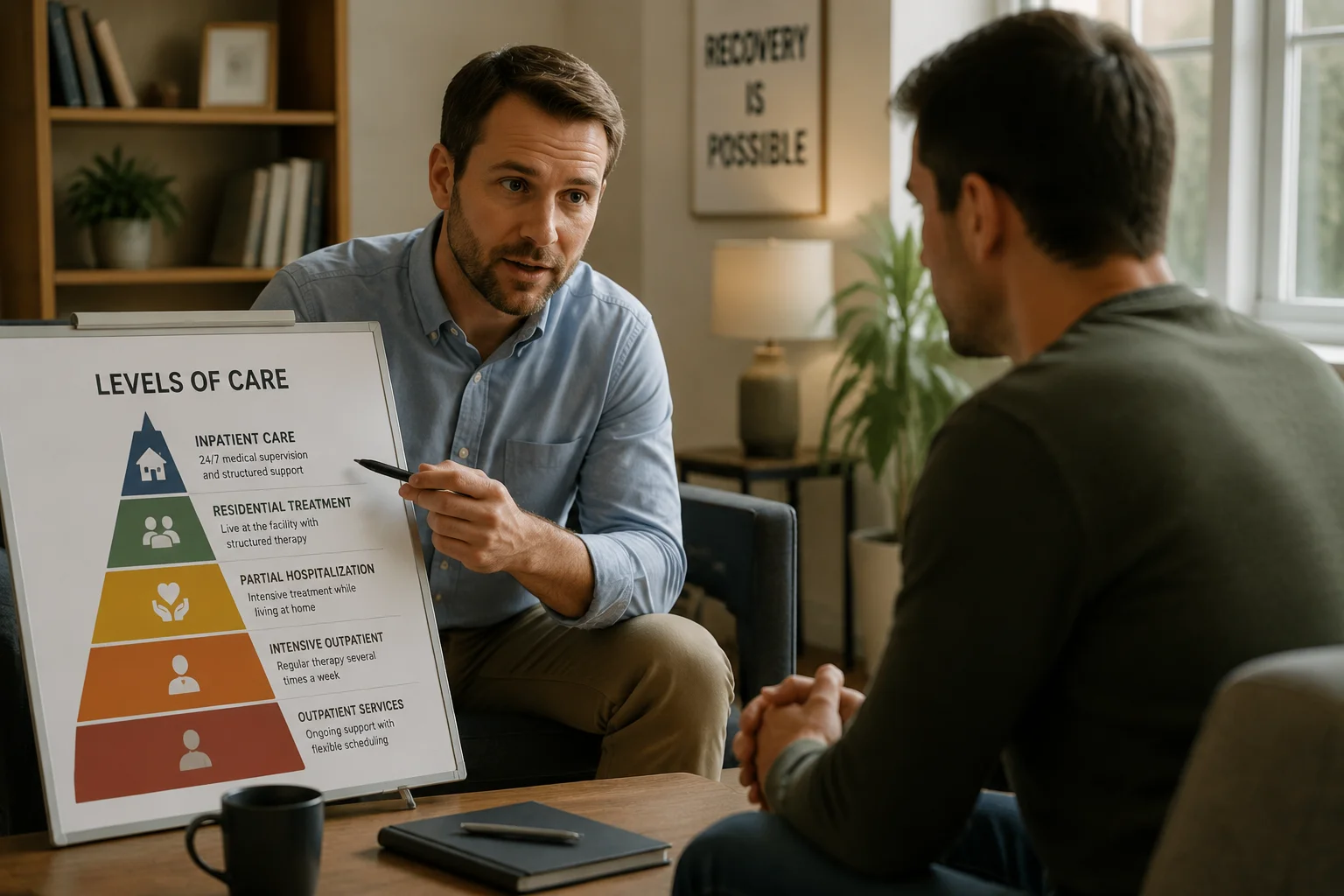
Treatment is offered at different intensities, and many people move from more to less intensive care over time:
- Medically supervised detox: monitored withdrawal management, the safe first step for alcohol and sedatives.
- Inpatient or residential: full-time care in a controlled environment.
- Partial hospitalization (PHP): intensive day treatment, often about 6 hours a day, several days a week.
- Intensive outpatient (IOP): structured treatment, often around 3 hours a day, a few days a week, while living at home.
- Sober living: substance-free housing that supports the transition after treatment.
Treatment approaches
Effective treatment is usually individualized and may combine several approaches: medication-assisted treatment (MAT) using FDA-approved medications for alcohol or opioid use disorder, cognitive behavioral therapy (CBT), motivational approaches, and peer support such as 12-step or non-12-step groups. There is no one right path; the best plan depends on the substance, the person’s health, and their preferences, decided with a clinician.
How to find a safe, legitimate program, and avoid patient brokering

This is where older adults and families most need protection. Many official-sounding websites that appear at the top of search results are not treatment providers at all; they are lead-generation “brokers” that collect your information, check your insurance, and sell your contact details to whichever facility pays most, a practice called patient brokering. Watch for these red flags:
- Guaranteed “cures” or unrealistic success rates
- Offers to pay your insurance deductible, or “free” treatment, airfare, or gifts
- Pressure to share insurance or personal details before any clinical conversation
- Little interest in the person’s actual medical or clinical situation
To find legitimate care, use a trustworthy source that links you directly to providers rather than pre-screening you. SAMHSA’s Find Treatment is the safest starting point. When you evaluate a specific program, check for genuine accreditation and standards:
- Accreditation by CARF or The Joint Commission
- Membership in NAATP (National Association of Addiction Treatment Providers)
- Care consistent with ASAM (American Society of Addiction Medicine) criteria
- A LegitScript certification on the website (a marker Google and Meta now require to advertise treatment)
Then contact the facility directly through its own website or phone number, and ask to see a sample treatment plan, how much one-on-one therapy is included, and what a typical stay looks like.
How to pay for treatment
Cost should not stop anyone from getting help, and there are more options than people expect. Medicare covers medically necessary substance use disorder treatment: Part A for inpatient hospital care, Part B for outpatient services, and Part D for medications, with Medicare Advantage plans covering it as well. Medicaid, Veterans (VA) programs, and state-funded programs also cover treatment for those who qualify. Many facilities offer sliding-scale fees based on income, and some nonprofits provide partial scholarships. Ask each program directly what your insurance covers and what financial assistance is available.
Support for families
If you are a family member, you do not have to navigate this alone. Al-Anon offers support for families affected by someone else’s drinking, and SAMHSA provides family resources and the same 24/7 helpline. Supporting a loved one is hard, and looking after your own wellbeing is part of helping them.
Frequently asked questions
What are the signs of substance use disorder in older adults?
Common signs include increasing use of alcohol or sedating medications, running out of prescriptions early, new confusion or mood changes, falls, withdrawing from others, and secrecy about use. Because these can mimic aging, it is worth raising concerns with a doctor.
Does Medicare cover addiction treatment?
Yes. Medicare covers medically necessary substance use disorder treatment: Part A for inpatient care, Part B for outpatient services, and Part D for medications, and Medicare Advantage plans cover it too. Confirm specifics with your plan and the provider.
How do I find a safe, legitimate rehab?
Start with SAMHSA’s FindTreatment.gov, which links you directly to providers rather than selling your information. Look for CARF or Joint Commission accreditation, ASAM-consistent care, and a LegitScript certification, and contact the facility directly.
Is detox dangerous?
It can be. Withdrawal from alcohol and benzodiazepines can be medically serious, so detox from these should be medically supervised. Do not stop them abruptly on your own; talk to a doctor or call the SAMHSA helpline first.
How do I help a parent who will not admit they need help?
Approach with care and without judgment, focus on specific concerns rather than labels, and involve their doctor. The SAMHSA helpline can advise families on next steps, and Al-Anon offers support for relatives.
Where to get help right now
Treatment works, and it is never too late. If you or someone you love may have a problem with alcohol or drugs, reach out today:
- SAMHSA National Helpline: 1-800-662-HELP (4357), free, confidential, 24/7
- 988 Suicide and Crisis Lifeline: call or text 988
- Find treatment: FindTreatment.gov
- In an emergency: call 911
Asking for help is a sign of strength, not weakness, and the right program can make a real difference at any age.