
Wedding Insurance Explained: Cost & Coverage (2026)
Last Reviewed: June 2026 | By Sharon O’Day, Senior Advisor | Fact-checked by the Grandfolk Editorial Team





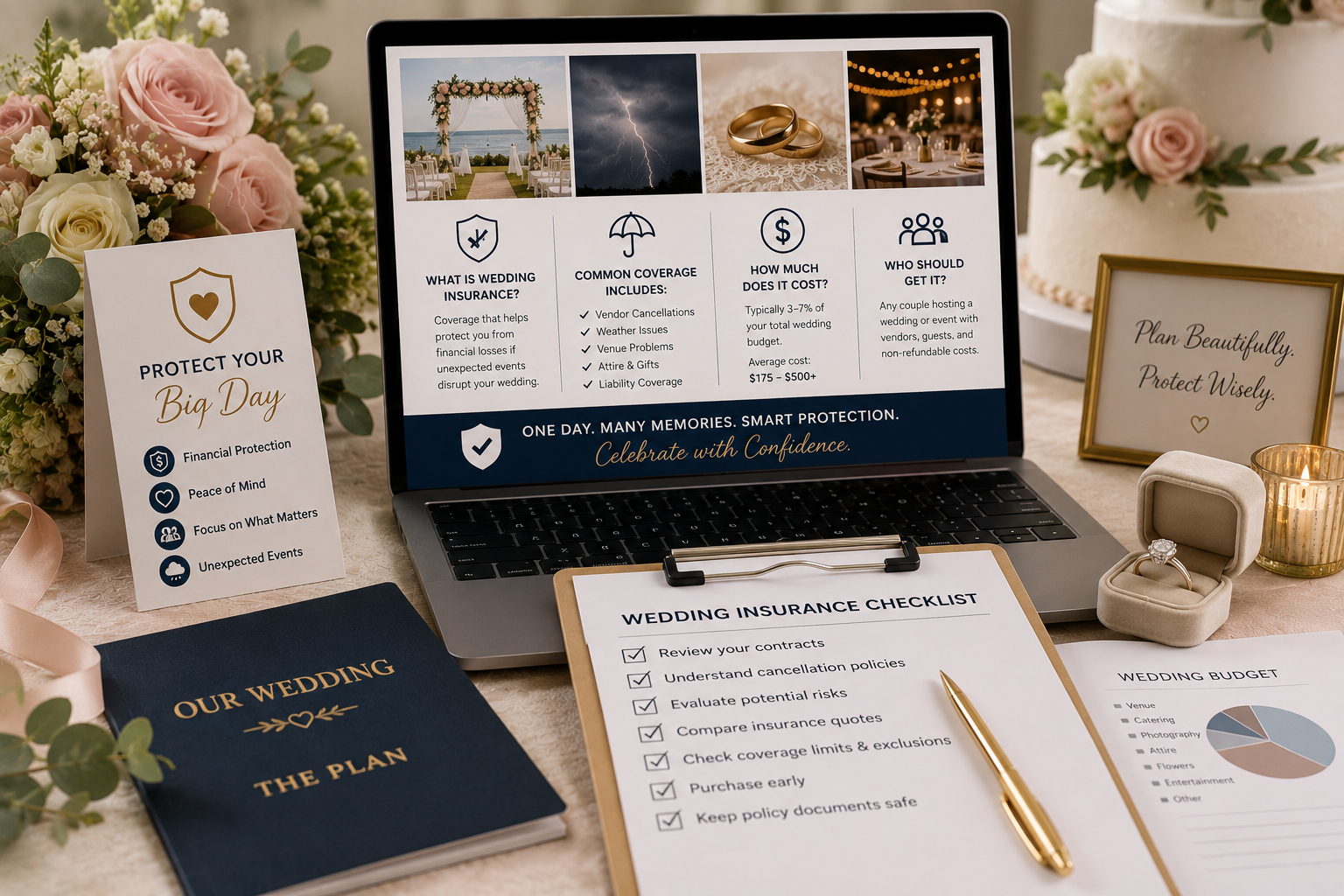
A wedding is a time filled with hope and optimism, and a surprising amount of money on the line. With the average U.S. wedding now around $34,200 (per The Knot’s 2026 Real Weddings Study), and far more for larger celebrations, a stubborn little voice asks, But what if something goes wrong? From a no-show vendor to a bankrupt venue, from a state of emergency storm to a key person falling ill, wedding insurance can cover many of those losses for a reasonable cost. As with any insurance, the devil’s in the details, premiums, coverage, deductibles, exclusions, and limits, so here’s how it works and how to decide if it’s right for your event.
What is wedding insurance, and do you need it?
Wedding insurance is short-term, special-event coverage that protects the money you commit to your wedding. The way to decide whether you need it is simple: list everything that could go wrong, estimate the cost of each, and decide which losses you could not comfortably absorb on your own. Then insure those gaps.
Where the wedding is held changes what you already have covered:
- At a private home: the host’s homeowners insurance (or renters insurance) may cover guest injuries, property damage, and stolen or lost gifts, but it often excludes host liquor liability and won’t cover vendor or travel losses.
- At a traditional venue (banquet hall, clubhouse): ask to see the venue’s policy so you know what’s already covered.
- At a non-traditional private venue (vineyard, ranch, barn): you’ll likely need full coverage, starting with liability for injury or damage.
The two types of wedding insurance
Most policies are built from two distinct coverages, sold together or separately:
Liability insurance (and host liquor liability)
This works like the liability coverage on your home or car: it pays for bodily injury or property damage to third parties that you or your guests are responsible for, plus related medical costs. The wedding-specific twist is host liquor liability, which protects you if an intoxicated guest who was served alcohol at your event causes injury or damage. Wedding liability limits typically run $500,000 to $2,000,000 (some insurers offer up to $5 million), and a single policy often covers the rehearsal, rehearsal dinner, ceremony, and reception. The Insurance Information Institute has a neutral overview.
Event cancellation and postponement insurance
Less familiar, this reimburses losses when the event can’t happen as planned for a reason outside your control, it does not cover simply changing your mind. Covered losses can include non-refundable deposits, catering, venue rental, travel and lodging, and rental attire/jewelry, typically triggered by a vendor failing to deliver, a venue going under, or a key member of the wedding party being unable to attend. Related add-ons often cover additional-expense upcharges (paying more for a last-minute substitute), photo/video failures, and loss or damage to gifts, attire, and jewelry tied to the event.
According to one major wedding insurer’s claims data, the most common paid claims are vendor issues (~30%), illness or injury (~29%), and extreme weather (~16%).
What wedding insurance does not cover
Read the exclusions carefully, this is where surprises happen. Standard policies generally don’t cover:
- Change of heart / cold feet, calling off the wedding because you’ve reconsidered.
- Foreseeable weather, a named storm already forecast before you bought the policy.
- Pandemics and communicable disease, since 2020, most policies exclude cancellation due to a pandemic or communicable-disease outbreak. If that risk matters to you, ask specifically what (if anything) is covered, because standard wording almost always excludes it.
- Engagement and wedding rings, see the next section.
Wedding insurance vs. engagement ring insurance
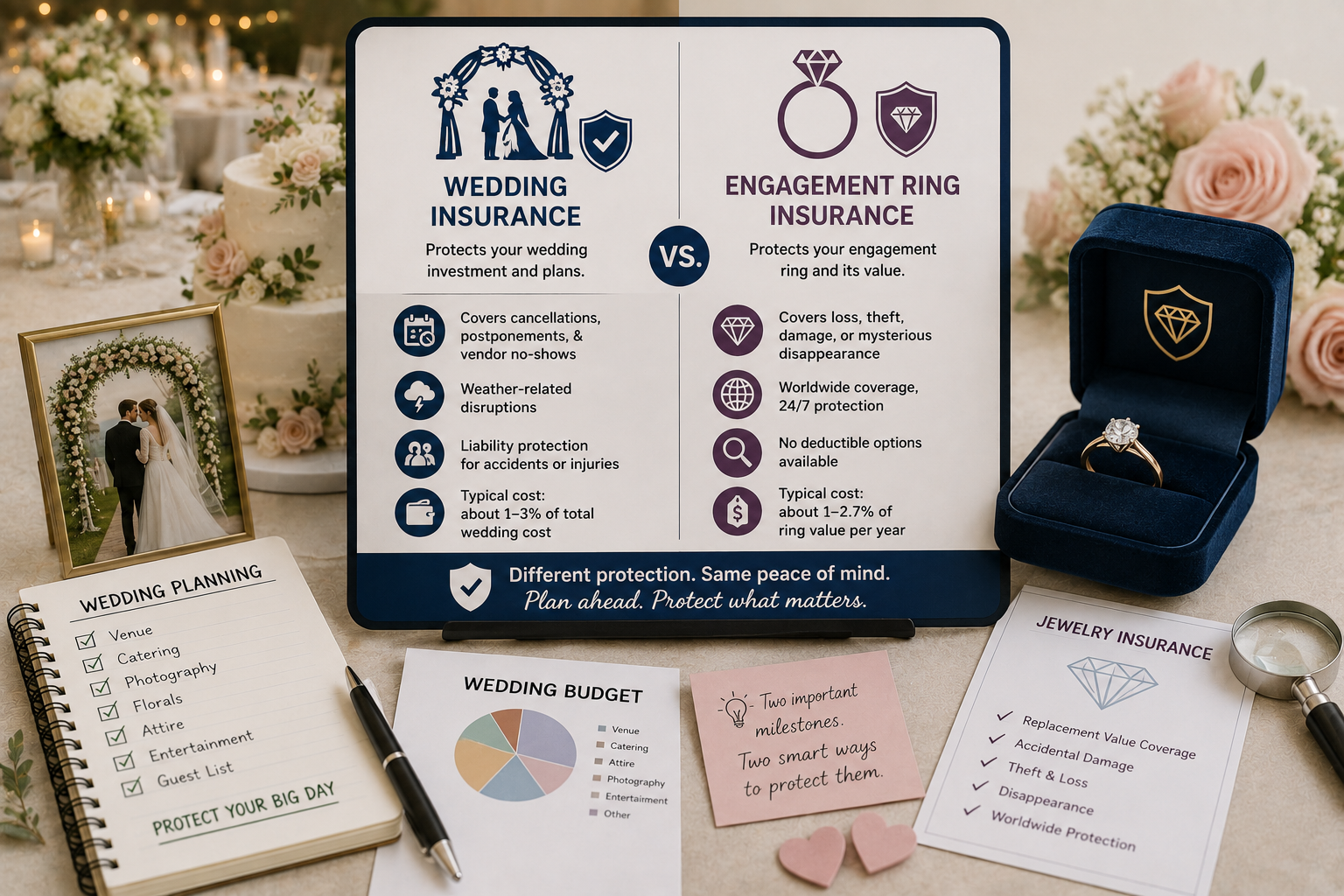
These are commonly confused. Event cancellation/liability insurance covers the event; it does not insure your engagement or wedding rings as jewelry. To protect the rings against loss, theft, or damage, you need a scheduled jewelry policy or a rider on a homeowners/renters policy, a separate purchase from your wedding insurance.
Does your venue require insurance?
Many venues require proof of liability insurance (and ask to be named an additional insured) before they’ll confirm a booking, sometimes 30 days before the event. Check your contract early; if it’s required, you may need the liability portion in place sooner than the rest.
How much does wedding insurance cost?
Wedding insurance is relatively affordable, and cost scales with the coverage limits you choose:
- Cancellation/postponement coverage: roughly 1-2% of the insured amount, for example, around $250 to cover $25,000 in cancellation/postponement costs. Coverage limits commonly range from about $7,500 to $175,000.
- Liability coverage: often starts between $70 and $170, with or without host liquor liability, and scales up with the limit (to $2 million or more).
- Comprehensive (non-liability) plans: some start around $160 with no deductible, bundling cancellation, gifts, attire, photos/video, and more.
For context on what you’re protecting, the average wedding runs about $33,000-$34,200, though the median is far lower (closer to $13,000-$15,000) because luxury weddings pull the average up, so size your coverage to your actual, non-refundable exposure, not the national average. (See The Knot’s cost data.)
When to buy (and how to choose a policy)
Buy your policy before you start writing checks, deposits and prepayments are exactly what you’re protecting, so coverage should be in place before anything could go wrong. There’s rarely a formal waiting period, but timing still matters: many venues require 50% of fees around the 90-day mark, some require liability coverage 30 days out, and extreme-weather coverage must be bought well before a storm becomes foreseeable.
To choose well:
- Make a realistic list of your non-refundable exposure and insure to that, no more, no less.
- Get quotes from 2-3 insurers and request each company’s contract so you can read the exclusions and limits yourself.
- Note any deductibles on each coverage.
- Pay attention to how each company treats you up front, it previews your claims experience.
How to vet the insurer
You want a company that will be there if you file a claim:
- Check complaints and how they’re resolved at the Better Business Bureau and the NAIC (larger companies naturally have more complaints, look for trends and resolution).
- Confirm financial strength at A.M. Best.
- Read responsible online reviews, remembering that satisfied customers rarely post, look for patterns, not one-offs.
Wedding insurance providers to compare
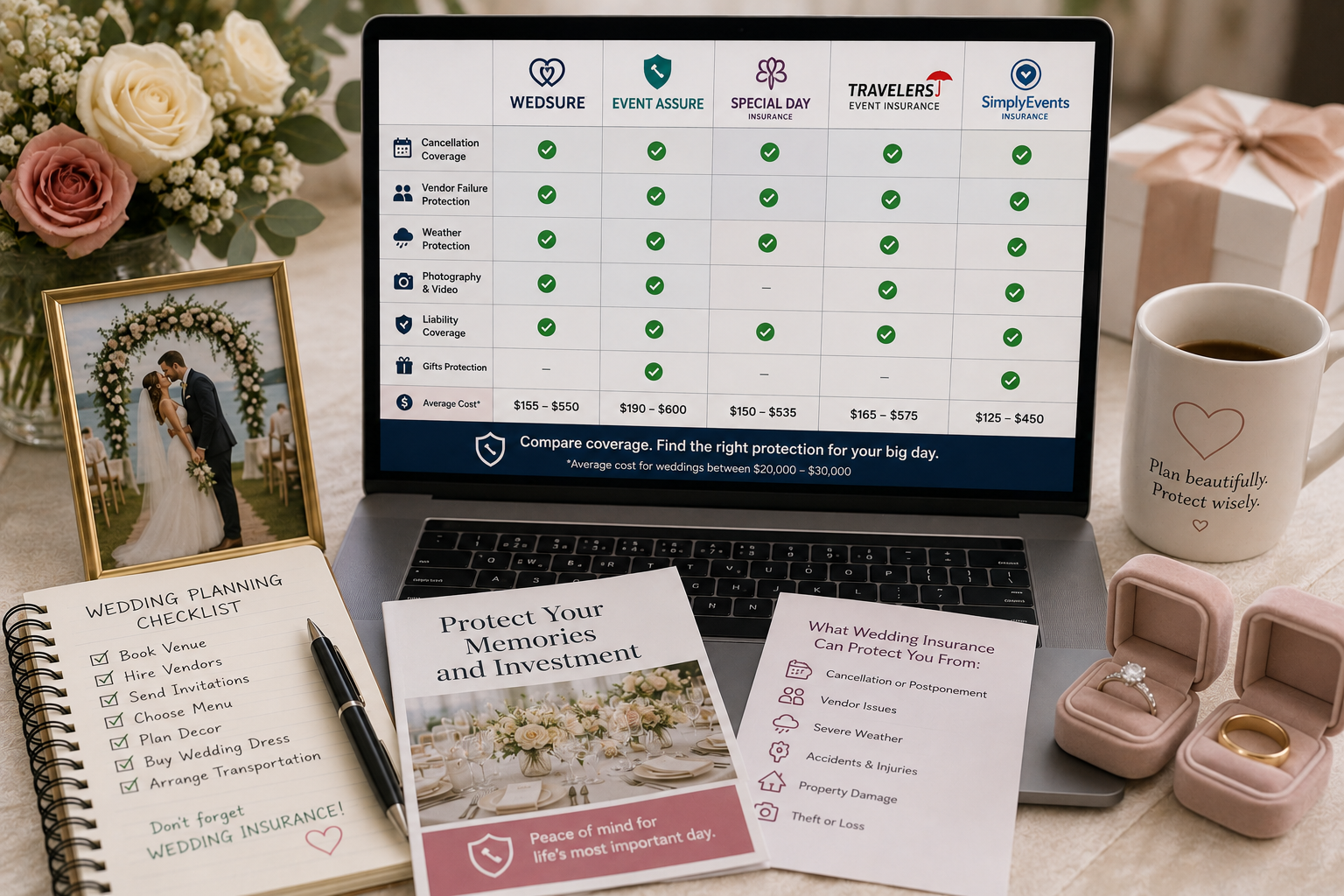
Several insurers specialize in wedding and special-event coverage. Get quotes from a few and compare the actual coverages and limits rather than relying on a generic ranking:
- WedSafe (Markel), Wedsure, Travelers, Progressive (event), and eWed Insurance are commonly compared options. A note for parents and grandparents helping pay
Many older adults encounter wedding insurance not for their own wedding but as the parent or grandparent helping pay for, or hosting, a wedding. If you’re contributing significant non-refundable money, you have the same exposure the couple does, and you can be a named insured on the policy. Two extra considerations when an older host or wedding-party member is involved: the chance that someone can’t participate (forcing a postponement) is a bit higher, which is exactly what cancellation coverage addresses; and if the celebration is at your home, confirm your homeowners liability and whether host liquor liability applies. (If you’re also funding a honeymoon, see our guide to travel insurance.)
Frequently asked questions
Is wedding insurance worth it?
For most couples it’s inexpensive relative to what’s at stake, a few hundred dollars to protect tens of thousands in non-refundable costs and liability. If your event is small and most costs are refundable, it may be unnecessary.
How much does wedding insurance cost?
Cancellation coverage typically runs about 1-2% of the insured amount (e.g., ~$250 for $25,000 of coverage). Liability coverage often starts around $70-$170. Comprehensive plans can start near $160.
What does wedding insurance cover?
Two main things: liability (injury or property damage you or guests cause, including host liquor liability) and event cancellation/postponement for reasons outside your control, with add-ons for gifts, attire, and photo/video failures.
What does wedding insurance not cover?
Change of heart, foreseeable weather, and, since 2020, most policies exclude cancellation due to a pandemic or communicable disease. It also doesn’t insure your rings.
Does wedding insurance cover the engagement ring?
No. Rings need a separate scheduled jewelry policy or a rider on a homeowners or renters policy.
Does my venue require wedding insurance?
Many venues require liability coverage and ask to be named an additional insured, sometimes 30 days before the event. Check your contract early.
When should I buy wedding insurance?
Before you make your first non-refundable payment, so those deposits are protected, and early enough to satisfy any venue deadlines and weather-coverage timing.
Can I cancel a wedding insurance policy?
Many insurers don’t allow cancellation once the premium is paid; those that do may charge a refund fee. Read the policy before buying.
Final thoughts
Wedding insurance protects the money you’ve committed to a celebration you can’t fully control, vendors, venues, weather, and the unexpected. Decide between liability and cancellation coverage (or both), insure your real non-refundable exposure rather than a national average, read the exclusions (especially the pandemic and change of heart carve-outs), buy before your first deposit, and choose a financially strong insurer. And remember the rings are a separate jewelry policy. For related coverage, see our guides to homeowners insurance, travel insurance, and the rest of our senior insurance guides.

Sharon O'Day - Senior Advisor
Sharon O'Day is the Health editor at Grandfolk, where she commissions and reviews fitness, wellness, and senior-care content for accuracy, clarity, and real-world usefulness. At 60-plus, she writes for older adults from lived experience, testing the advice against the questions she and her peers actually ask. She focuses on guidance that is honest about both the benefits and the limits, and that always points readers back to their own doctor for personal decisions.