
Homeowners Insurance for Seniors: Cost & Coverage (2026)
Last Reviewed: June 2026 | By Sharon O’Day, Senior Advisor | Fact-checked by the Grandfolk Editorial Team






For most seniors, the house is the single biggest asset they own – often worth more than everything in the bank combined. Homeowners insurance exists to make sure a fire, storm, theft, or liability claim can’t wipe that out. If you carry a mortgage, your lender requires it; even if you own your home free and clear, self-insuring against a total loss usually isn’t realistic.
Two things have changed enough recently to be worth knowing before you renew or shop: prices are much higher than a few years ago, and in some states coverage is harder to find at all. The national average premium now runs roughly $2,400–$2,800 a year – and far more in high-risk states. Here’s what the coverage actually does, how much you need, and how to keep the cost down.
What homeowners insurance covers
A standard policy bundles six coverages:
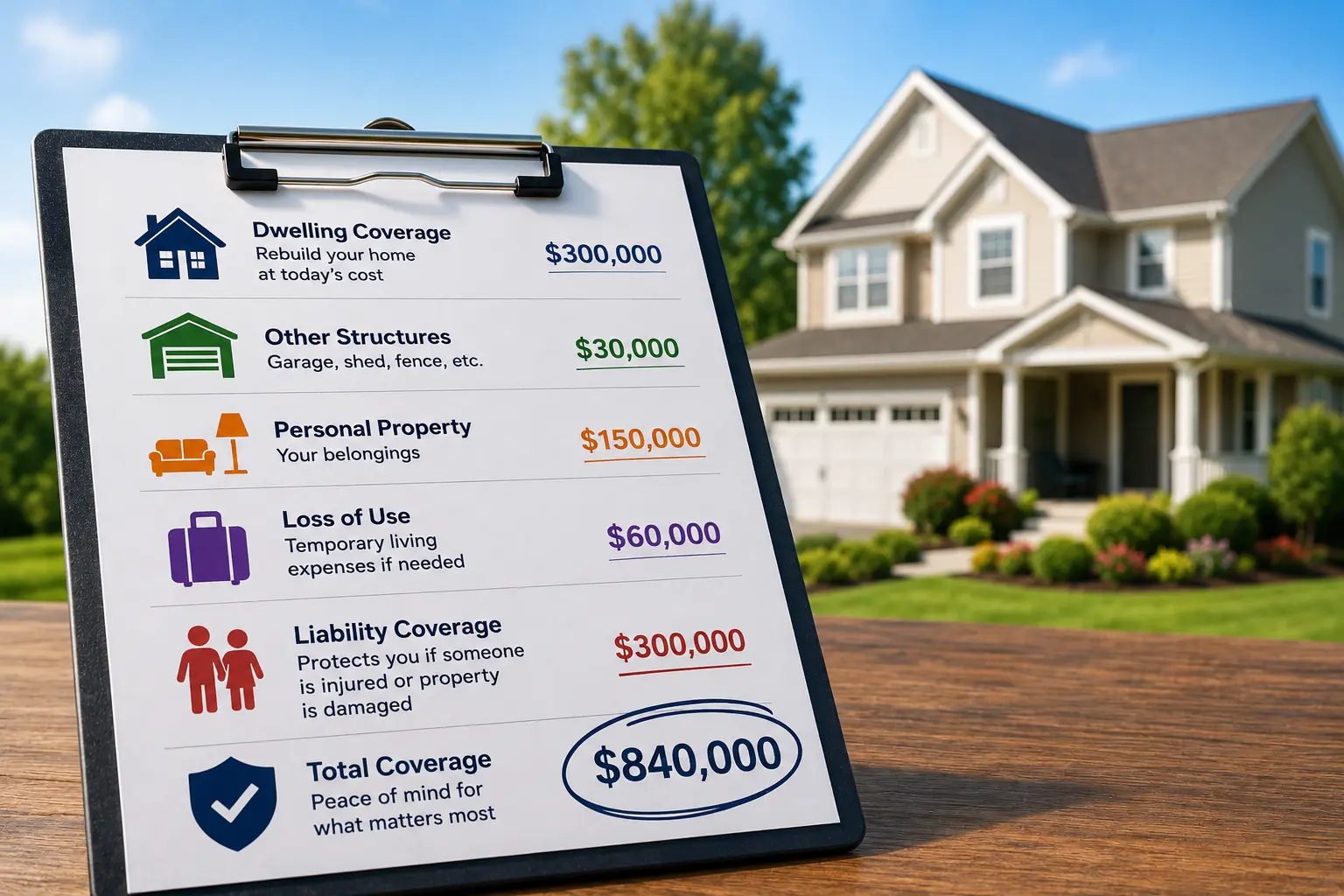
- Dwelling: repairs or rebuilds the structure of your home after a covered loss.
- Other structures: detached structures – a garage, shed, or fence.
- Personal property: your belongings, whether damaged at home or stolen away from home. Standard policies set low sub-limits on valuables like jewelry, art, and silver – you can schedule those at full value with an endorsement.
- Loss of use: additional living expenses (a hotel, meals) if your home is uninhabitable while it’s repaired.
- Personal liability: legal and damage costs if you’re responsible for someone’s injury or property damage.
- Medical payments: smaller medical bills for a guest hurt on your property, regardless of fault.
The Insurance Information Institute keeps a plain-English breakdown of each.
Standard policy types (HO-3, HO-5, HO-8)
You’ll see policies labeled with HO numbers:
- HO-3 is the standard policy for most single-family homes – it covers the structure against all perils except those specifically excluded, and your belongings against named perils.
- HO-5 is a broader, premium version that covers belongings on an open-perils basis too – worth it for higher-value homes.
- HO-8 is built for older homes whose rebuild cost exceeds market value (common for long-time owners of historic houses) and typically pays on a repair-cost basis.
What homeowners insurance does not cover
This is where people get caught. A standard policy generally excludes flooding and earthquakes, plus normal wear and tear, neglect, pest damage, and mold. Flood damage requires a separate policy through the National Flood Insurance Program (or a private flood insurer), and earthquake coverage is a separate policy or endorsement. Given how much weather risk has risen, check your exclusions carefully – don’t assume storm damage includes a flood.
How much coverage do you need?
Dwelling: replacement cost, not market value
Set your dwelling coverage to what it would cost to rebuild your home today – not what you paid and not its market price (which includes the land). Many insurers require you to insure to 100% of the estimated rebuild cost; at minimum, the common 80% rule says insuring below 80% of rebuild cost can leave you underpaid even on partial claims. Because construction costs have jumped, an extended or guaranteed replacement cost add-on (which pays a set percentage above your limit, or the full rebuild cost) is worth pricing out. A good rule of thumb for personal property is roughly 50% of your dwelling amount – verify with a quick home inventory. The III has a useful coverage-amount guide.
Replacement cost vs. actual cash value
For your belongings, replacement cost pays what it costs to buy new today; actual cash value subtracts depreciation and pays less. Replacement cost costs a bit more in premium but pays far better at claim time – usually the right choice.
How much does homeowners insurance cost in 2026?
There’s no single price, but to set expectations: the national average is roughly $2,400–$2,800 per year as of the most recent data, and it varies enormously by state – from around $800 in Hawaii to $5,000+ in Oklahoma, Nebraska, and Florida. Rates have climbed sharply, rising on the order of 45%+ cumulatively between 2020 and 2025 nationwide, driven by higher rebuild costs and more frequent severe-weather losses.
What affects your premium
- Replacement cost, age, and condition of your home.
- Location – wildfire, hurricane, hail, and crime risk.
- Coverage limits, deductible, and endorsements you choose.
- Claims history yours and the area’s.
- Credit-based insurance score, in states that allow it.
The availability & rate-increase squeeze
In higher-risk states, the bigger problem isn’t price – it’s finding a policy at all. Insurers have non-renewed customers or pulled out of markets like Florida, California, and Louisiana. Where private coverage is scarce, states run FAIR plans (Fair Access to Insurance Requirements) as a last-resort option – typically basic coverage at a high premium. If you get a non-renewal notice, shop early and ask an independent agent about every available market before you’re left without coverage.
How to lower your premium (discounts)
- Bundle home with car insurance (often the biggest single discount).
- Raise your deductible (commonly $500–$1,000+) if you can cover it out of pocket.
- Install a monitored home security system, smoke/water detectors, or a newer roof.
- Ask about senior/retiree, claims-free, loyalty, and non-smoker discounts.
- Improve your credit where it’s a rating factor.
- Get an identity-theft endorsement rather than a standalone product if you want that protection – though compare against dedicated identity theft protection.
How to choose a policy and vet the insurer
Get quotes from three or four insurers with identical coverage, limits, and deductibles so you’re comparing like for like, and apply for every discount (agents rarely volunteer them). Before you commit:
- Check the insurer’s financial strength at A.M. Best – aim for an A rating or better.
- Look up complaints and licensing through the NAIC and your state insurance department.
- Review claims satisfaction in the J.D. Power home insurance studies – how a company pays claims matters more than its ad budget.
Homeowners insurance providers to compare
Several large insurers are commonly compared for home coverage. Get quotes from a few and compare the actual numbers and terms rather than relying on a generic ranking:
- State Farm – large agent network, frequently among the lower-priced national carriers.
- Allstate – broad coverage and bundling.
- Farmers – customizable endorsements through local agents.
- Nationwide – bundling discounts and standard coverages.
- AARP / The Hartford – home coverage marketed to AARP members.
- USAA – highly rated, but available only to the military community and some federal employees.
Tips for senior homeowners

- Insure to rebuild cost, and revisit it yearly. Construction costs have risen fast; a limit set a few years ago may now be too low.
- Plan for an empty or part-time home. If you spend months elsewhere or move to assisted living, tell your insurer – a home left vacant can trigger coverage limits. Don’t let that gap sit unaddressed.
- Prioritize easy service. Look for clear claims processes, 24/7 support, and multiple ways to reach a human.
- Re-shop after a big rate hike or non-renewal rather than going without coverage.
Frequently asked questions
How much does homeowners insurance cost on average?
Roughly $2,400–$2,800 a year nationally as of the latest data, but it ranges from around $800 in the cheapest states to over $5,000 in the most expensive, depending on location, home value, and coverage.
Is homeowners insurance required?
Not by law, but any mortgage lender will require it, and self-insuring against a total loss is rarely realistic even if you own your home outright.
Does homeowners insurance cover flooding?
No. Flood damage needs a separate policy through the National Flood Insurance Program or a private flood insurer. Earthquakes are also excluded and require separate coverage.
How much dwelling coverage do I need?
Enough to rebuild your home at today’s construction costs, not its market value. Many insurers require insuring to 100% of rebuild cost; consider an extended or guaranteed replacement cost add-on.
What is the difference between replacement cost and actual cash value?
Replacement cost pays what it costs to replace an item new; actual cash value subtracts depreciation and pays less. Replacement cost costs a little more but pays better at claim time.
How can I lower my homeowners insurance premium?
Bundle with auto, raise your deductible, add safety/security devices, keep a claims-free record, and ask about senior and loyalty discounts.
Does homeowners insurance have a waiting period before I can file a claim?
No – coverage is effective from your policy start date. Insurers may pause writing new policies right before a named storm (a binding moratorium), and some specific perils can have waiting periods, but there’s no general 30–90 day wait to file a claim.
What’s the best policy type for an older home?
An HO-8 policy is designed for older homes where the rebuild cost exceeds market value; otherwise HO-3 is standard, and HO-5 offers broader belongings coverage.
Final thoughts
Homeowners insurance protects the asset most of your retirement security is tied to. Insure to your home’s rebuild cost, understand what’s excluded (especially flood), apply every discount, and choose a financially strong insurer with service you can actually reach – and re-shop rather than go uninsured if you’re hit with a steep increase or a non-renewal. Your home is also your biggest financial resource; if you’re weighing ways to tap it, see our guide to a home equity loan and the rest of our senior insurance guides.

Sharon O'Day - Senior Advisor
Sharon O'Day is the Health editor at Grandfolk, where she commissions and reviews fitness, wellness, and senior-care content for accuracy, clarity, and real-world usefulness. At 60-plus, she writes for older adults from lived experience, testing the advice against the questions she and her peers actually ask. She focuses on guidance that is honest about both the benefits and the limits, and that always points readers back to their own doctor for personal decisions.