
Best Prescription Delivery for Seniors in 2026
We’ve researched and reviewed the best prescription delivery on the market.






Last Reviewed: June 2026 | By Sharon O’Day, Senior Advisor| Fact-checked by the Grandfolk Editorial Team
By our mid-sixties, we probably have at least one medication we take every day – and will for the rest of our lives. Those are called ‘maintenance’ medications. (Other pills may deal with specific short-term issues.) Few of us will not have a reason to go to the pharmacy to pick up medicine each month.
We get dressed, get in the car and drive to the drugstore. Then we either wait in line at the pharmacy to pick up a prescription or wait in the car at the slow drive-thru window service. That’s no one’s idea of fun. Prescription delivery services were invented to make those trips a distant memory. We sign up once with a service, either online or by phone, and the medications appear in our mailbox or on our doorstep each month until we tell them to stop. Like magic!
Getting prescriptions delivered to your door is one of the simplest ways seniors can save time, reduce trips out of the house, and make sure medications never run out. But not every prescription delivery service handles Medicare billing, offers free shipping, or makes the refill process easy for older adults.
We compared the top prescription delivery services for seniors based on cost, Medicare acceptance, delivery speed, and ease of use. Here is what we found.
Why Prescription Delivery Matters for Seniors

Seniors take more medications than any other age group. The average person over 65 takes four to five prescription drugs daily. Managing refills, tracking copays, and making regular pharmacy trips adds up quickly.
Prescription delivery solves several real problems at once. It removes the need to drive or arrange transportation to a pharmacy. It can cut costs through mail-order pricing, which is often lower for 90-day supplies. And automatic refill programs reduce the risk of accidentally running out of a critical medication.
Mobility limitations, bad weather, and caregiver availability all make in-person pharmacy trips harder as people age. A reliable prescription delivery service removes that friction.
How Medicare Covers Prescription Delivery
Medicare Part D covers prescription drugs, including medications filled through mail-order pharmacies. Many Part D plans actually encourage mail-order fills because they cost the plan less. Some plans charge lower copays for a 90-day mail-order supply compared to a 30-day retail fill.
To use mail-order delivery with Medicare, you need a Part D plan that has a preferred mail-order pharmacy. Express Scripts and CVS Caremark are two of the largest. Your plan’s formulary will list which drugs are covered and at what cost.
Medicare Advantage (Part C) plans that include drug coverage work the same way. Check your plan’s Summary of Benefits to confirm which pharmacy network applies.
For seniors managing multiple medications, prescription delivery pairs well with other health support services. You can also review in-home care options if you need broader support beyond pharmacy management.
What to Look for in a Prescription Delivery Service
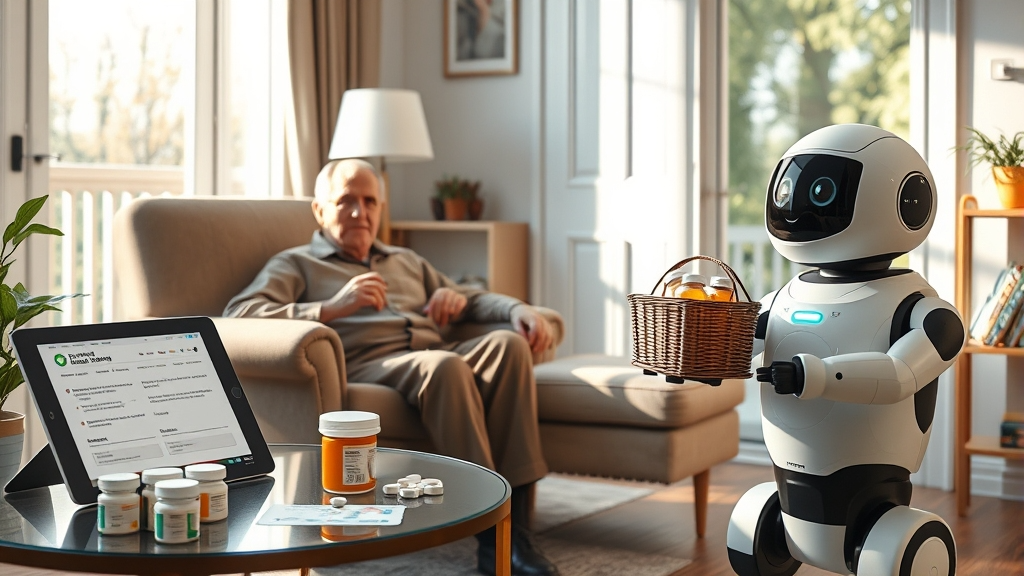
These are the factors that matter most for seniors:
- Medicare and Medicaid acceptance: Confirm the service accepts your specific plan. Not all online pharmacies work with every Part D plan.
- Free shipping: Most major services offer free shipping on standard delivery. Look for services that waive shipping fees on 90-day supplies.
- Same-day or next-day options: Useful for urgent refills. Availability varies by city and medication.
- Automatic refills: A service that tracks your refill schedule and ships before you run out is worth more than one that requires you to reorder manually.
- Refill reminders: SMS or email alerts when a refill is due reduce the chance of missing a dose.
- Pharmacist access: A good delivery service still lets you call or message a licensed pharmacist with questions.
- Over-the-counter products: Some services also deliver vitamins, medical supplies, and OTC medications alongside prescriptions. Convenient for seniors who want everything in one order.
- Ease of setup: Account creation, prescription transfer, and insurance verification should not require technical skills. The best services guide you through each step clearly.
Best Prescription Delivery Services for Seniors in 2026: Comparison
We evaluated each service on Medicare/Medicaid acceptance, shipping costs, delivery speed, refill tools, and real-world usability for older adults:
|
Provider |
Free Shipping |
Medicare/Medicaid |
Same-Day Option |
Refill Reminders |
OTC Products |
Rating |
|
Yes (90-day mail) |
Yes |
No |
Yes |
Limited |
4.6/5 |
|
|
Yes (Prime) |
Yes |
Yes (select cities) |
Yes |
Yes (vast) |
4.7/5 |
|
|
Yes ($4-$10 generics) |
Yes |
Yes (same-day pickup) |
Yes |
Yes |
4.4/5 |
|
|
Yes (CarePass) |
Yes |
Yes (select areas) |
Yes |
Yes |
4.3/5 |
|
|
Yes ($35+) |
Yes |
Yes (select areas) |
Yes |
Yes |
4.2/5 |
|
|
Yes (NYC/Chicago) |
Partial |
Yes (same-day) |
Yes |
No |
4.5/5 |
|
|
Yes ($5 flat fee) |
No |
No |
No |
No |
4.4/5 |
Note: Ratings and features reflect our evaluation as of early 2026. Availability of same-day delivery depends on your location and the specific medication.
Our Top Picks for Senior Prescription Delivery
1. Amazon Pharmacy: Best Overall for Seniors with Prime
Amazon Pharmacy stands out because of the combination of pricing transparency, fast delivery, and Prime membership benefits. Seniors who already use Amazon will find the setup process familiar. Prescriptions ship free with Prime, and Amazon displays the out-of-pocket cost before you confirm the order, which is something most pharmacies do not do.
Amazon accepts most Medicare Part D plans and works with many Medicaid programs. The RxPass program, available to Prime members, covers dozens of generic medications for a flat monthly fee. Same-day delivery is available in select cities for urgent fills.
When we evaluated Amazon Pharmacy against traditional mail-order services, the biggest differentiator was price transparency. You see exactly what you will pay before checkout. That matters for seniors on fixed incomes who are managing medication costs carefully.
2. Express Scripts: Best for Medicare Part D Coverage
Express Scripts is the largest pharmacy benefit manager in the U.S. and the preferred mail-order pharmacy for many Medicare Part D plans. If your plan lists Express Scripts as preferred, you will likely get the lowest copays by using it.
The service specializes in 90-day mail-order supplies, which saves most seniors money compared to monthly retail fills. Refill reminders arrive by phone, email, or app. Customer service includes 24/7 access to pharmacists.
Express Scripts is not an open retail pharmacy. You can only use it if it is included in your insurance plan. Check your plan documents before assuming you have access.
3. Cost Plus Drugs (Mark Cuban Cost Plus Drug Company): Best for Uninsured Seniors
Cost Plus Drugs charges a flat markup of 15% over the manufacturer’s cost, plus a $5 shipping fee. For seniors who pay out of pocket for generics, this often beats both retail pharmacy prices and even insurance copays.
The service does not accept insurance. That is intentional. The pricing model works by cutting out the layers of pharmacy benefit managers and negotiated contracts. For a senior taking common generics like metformin, lisinopril, or atorvastatin, Cost Plus Drugs can reduce monthly drug costs significantly.
The main limitation is selection. Cost Plus Drugs carries generics and a limited number of brand-name medications. It is best used as a supplement for specific drugs where out-of-pocket pricing beats your insurance copay.
4. CVS Pharmacy: Best for Combined Retail and Delivery
CVS gives seniors the flexibility to pick up in-store or have prescriptions delivered. The CarePass membership program includes free 1-2 day shipping, a monthly $10 reward, and 20% off most CVS store-brand products.
CVS accepts Medicare, Medicaid, and most private insurance. The app and website are reasonably easy to use. Same-day delivery is available in select areas. CVS also has a strong network of MinuteClinic locations, which can be useful for seniors who need a prescription filled after a quick visit.
5. Walmart Pharmacy: Best for Low-Cost Generic Medications
Walmart’s $4 generic drug list has been around for years and remains one of the best cash-pay deals for common medications. Delivery is available through Walmart+, and in-store pickup is available same day at most locations.
Walmart accepts Medicare and Medicaid. The pharmacy staff at most locations can help seniors set up auto-refills and walk through the insurance billing process in person. For seniors who already shop at Walmart regularly, using the pharmacy for delivery adds almost no extra steps.
6. Capsule: Best for Seniors in Major Cities
Capsule operates in New York City, Chicago, and a handful of other urban markets. Within those areas, it offers same-day delivery and a very simple setup process. The app and website are clean and easy to use.
Capsule accepts many insurance plans but does not cover all Medicare Part D plans. It is worth checking coverage before transferring prescriptions. For seniors in supported cities who want a fast, local pharmacy experience without leaving home, Capsule is a strong option.
How We Evaluated These Services

Our team reviewed each service’s insurance acceptance policies, delivery options, pricing structures, and website usability. We paid particular attention to how easy each service makes the initial setup for someone who is not tech-savvy.
The biggest gap we found across services was in customer support. Several services have excellent pricing but make it hard to reach a pharmacist quickly. For seniors managing complex medication schedules, access to a real pharmacist by phone is not optional. That factor influenced our rankings more than any other.
We also looked at how each service handles urgent situations, such as needing a medication refilled the same day or resolving an insurance billing error. The services that handled these edge cases well ranked higher regardless of their standard delivery performance.
Tips for Switching to Prescription Delivery
- Transfer one prescription first. Pick a maintenance medication you take regularly. Try the delivery process before moving everything over.
- Ask your doctor to send prescriptions electronically. E-prescribing makes the transfer faster and reduces errors.
- Confirm your insurance is accepted before transferring. Call the delivery service or check their website with your plan ID.
- Set up automatic refills from day one. Most services allow this during setup. It prevents you from running out before the next delivery arrives.
- Keep a small supply at a local pharmacy as backup. For the first month or two, ask your local pharmacy to hold one emergency fill in case a delivery is delayed.
Prescription Delivery and Senior Safety
Medication adherence is a real issue for older adults. Missing doses of blood pressure, diabetes, or heart medications can have serious health consequences. Prescription delivery with automatic refills removes the most common reason seniors miss doses: running out of medication.
Delivery services also help family caregivers. When adult children manage a parent’s medications remotely, a reliable mail-order service with online account access lets them monitor refill status and catch issues before they become problems.
For seniors who need additional support at home, in-home care services can complement prescription delivery by helping with medication management in person. Medical alerts are another layer of safety worth considering for seniors living alone.
Frequently Asked Questions
Does Medicare cover prescription delivery?
Yes. Medicare Part D covers prescriptions filled through approved mail-order pharmacies. Many Part D plans offer lower copays on 90-day mail-order supplies than on 30-day retail fills. Check your plan’s formulary and preferred pharmacy network to confirm which services are covered.
What is the best prescription delivery service for seniors?
It depends on your insurance and how you pay. Amazon Pharmacy is best for Prime members who want price transparency and fast shipping. Express Scripts is best for seniors whose Part D plan uses it as a preferred pharmacy. Cost Plus Drugs is best for seniors paying cash for generics.
Can I get same-day prescription delivery?
Yes, in select cities. Amazon Pharmacy, Capsule, CVS, and Walgreens all offer same-day or next-day delivery options in some areas. Availability depends on your location and whether the medication is stocked locally. Call ahead or check the service’s website to confirm same-day availability in your area.
Are mail-order pharmacies safe for seniors?
Yes, as long as you use a licensed pharmacy. Look for NABP (National Association of Boards of Pharmacy) accreditation or a .pharmacy domain in the website address. Avoid any online pharmacy that does not require a valid prescription before dispensing medication.
How do I transfer my prescription to a delivery pharmacy?
Give the delivery pharmacy your current pharmacy’s name and phone number. They will contact your current pharmacy and handle the transfer. For new prescriptions, ask your doctor to send the prescription electronically directly to the delivery pharmacy. Most delivery services have a transfer form on their website to make this easier.
Find the Right Prescription Delivery Service
The right service depends on your insurance, your location, and how many medications you take. Use the comparison table above to narrow your options. If you take several maintenance medications and have Medicare Part D, start by checking whether Express Scripts or CVS Caremark is your plan’s preferred pharmacy.
If you pay out of pocket for any generics, check Cost Plus Drugs pricing for those specific medications. The savings can be significant.

Sharon O'Day - Senior Advisor
Sharon O'Day is the Health editor at Grandfolk, where she commissions and reviews fitness, wellness, and senior-care content for accuracy, clarity, and real-world usefulness. At 60-plus, she writes for older adults from lived experience, testing the advice against the questions she and her peers actually ask. She focuses on guidance that is honest about both the benefits and the limits, and that always points readers back to their own doctor for personal decisions.