

Sedentary lifestyles are known culprits for many health issues – but who says you need a gym membership or strenuous workouts to stay in shape? Release your inner fitness enthusiast from the comfort of your chair. You are introducing 11 highly effective chair exercises designed specifically for seniors! Whether you’re battling mobility issues, recuperating from surgery, or simply looking for light fitness routines that can be done anytime, anywhere- this blog post is perfect! Wave goodbye to age-related lethargy and engage your musculature on your beloved armchair with our thoroughly researched, doctor-approved, and age-appropriate workout regimen. Brace yourself for a fitter, healthier version of YOU.
Our article outlining the 11 most effective chair exercises for seniors provides an overview of safe, low-impact workouts that can be performed while seated. These exercises include arm, leg, core, and back strengthening movements to help older adults maintain and improve their overall physical health and well-being-. We provide step-by-step instructions and visual guides to ensure proper form and technique during each exercise.
Benefits of Chair Exercises for Seniors

For aging adults with difficulty with mobility or standing for long periods, chair exercises offer an excellent alternative to traditional workouts. These exercises are designed to be performed while seated, making them accessible and safe for seniors of all fitness levels. Now, let’s explore the numerous benefits of chair exercises for seniors.
Regular participation in chair exercises can help keep the heart healthy and prevent cardiovascular issues. Engaging in physical activity promotes blood circulation and helps regulate blood pressure. This, in turn, reduces the risk of strokes, heart attacks, and other heart-related ailments. By incorporating consistent chair exercises into their routine, seniors can significantly improve their heart health and overall well-being.
Imagine a senior named Sarah who has been sedentary for a long time due to mobility challenges. She decided to start performing seated aerobic exercises regularly. Over time, Sarah notices that her stamina increases, she feels less tired during daily activities, and climbing stairs becomes much easier. These improvements are a direct result of her increased cardiovascular fitness from the chair exercises she has been doing.
In addition to promoting heart health, chair exercises also play a crucial role in preventing chronic diseases such as high blood pressure and dementia. Regular physical activity has been shown to reduce the risk of developing these conditions by improving circulation, enhancing brain function, and reducing inflammation.
With a solid understanding of the general benefits of chair exercises for seniors, let’s look at how they promote heart health and prevent chronic diseases.
- Chair exercises offer an accessible and safe alternative to traditional workouts for aging adults with mobility challenges. Regular participation in chair exercises can improve heart health, prevent chronic diseases such as high blood pressure and dementia, and enhance overall well-being. Incorporating consistent chair exercises into a daily routine can increase stamina, reduce fatigue during everyday activities, and make climbing tasks easier.
Promoting Heart Health and Chronic Disease Prevention
Regular chair exercise routines can significantly contribute to maintaining a healthy heart and preventing the onset of chronic diseases. The following are some specific ways in which chair exercises support heart health and chronic disease prevention:
- Improving Circulation: Chair exercises involve repetitive movements that stimulate blood flow. This increased circulation helps deliver oxygen and nutrients to the muscles, organs, and tissues, promoting cardiovascular health.
- Lowering Blood Pressure: Regular physical activity, including chair exercises, can help lower blood pressure levels by improving the efficiency with which the heart pumps blood. This can reduce the strain on nature and decrease the risk of hypertension.
- Enhancing Endurance: Chair exercises strengthen and condition various muscle groups, including the heart. As a result, seniors who regularly perform these exercises can improve their endurance, making daily tasks easier to accomplish without excessive fatigue.
- Reducing Inflammation: Chronic inflammation is associated with various diseases, including heart disease and dementia. By engaging in chair exercises promoting movement and flexibility, seniors can help reduce inflammation, lowering their risk of developing these conditions.
By incorporating chair exercises into their daily routine, seniors can reap these numerous benefits for their heart health and overall well-being. It is always a good idea to consult with a healthcare professional before starting any exercise program to ensure that it aligns with individual health needs and limitations.
Let’s consider George, an elderly gentleman diagnosed with high blood pressure. His doctor recommends adding chair exercises to his daily routine to assist in managing his condition. After several months of consistent participation in these exercises, George observed significant improvement in his blood pressure readings. The combination of improved cardiovascular fitness and reduced inflammation improves his heart health.
It’s clear that the advantages of chair exercises extend beyond just physical fitness—they profoundly impact overall health and well-being.
Enhancing Strength, Endurance, and Balance
As we age, it becomes essential to prioritize exercises that enhance strength, endurance, and balance. Fortunately, chair exercises provide seniors with a convenient and safe way to achieve these goals. Let’s delve into some effective fitness routines that target these aspects.
Seated Shoulder Press is a great exercise for strengthening the upper body and improving endurance. By extending the arms overhead with resistance bands or weights while sitting in a chair, seniors can gradually increase their strength, mobility, and endurance. This exercise not only helps in performing day-to-day activities but also contributes to better posture.
Another beneficial exercise is Seated Front Shoulder Raises. This exercise focuses on the shoulders and chest muscles. By holding objects (such as water bottles) in front of the body or extending one arm forward alternately while seated, seniors can improve their shoulder strength and stability. This exercise proves particularly useful when lifting objects or reaching shelves.
One exercise that targets multiple muscle groups is the Seated Chest Press. Seniors use resistance bands or weights while seated to engage their chest muscles, shoulders, and triceps. This exercise helps improve upper body strength and maintain proper posture by counteracting the effects of sitting for extended periods.
Working on balance is equally important for seniors. Seated Leg Extensions are excellent for enhancing lower body strength and stability. Seniors strengthen their quadriceps muscles by extending one leg at a time while sitting in a chair. Strong quads are crucial for maintaining balance and preventing falls.
Seated Leg Curls are another beneficial exercise that targets the hamstrings. Seniors engage their hamstring muscles effectively by curling the lower leg towards the hips while seated. These muscles are vital in everyday movements such as walking and climbing stairs.
Seniors can also incorporate Seated Calf Raises into their workout routine to strengthen calf muscles. Seniors work on their calf muscles by raising and lowering their heels while seated with the help of a sturdy chair. Strong calves contribute to better balance and stability.
Remember, it’s essential to maintain proper form and posture during all exercises to prevent any pain or injury. If unsure about the correct technique, consult a fitness professional or refer to visual guides and step-by-step instructions from reliable sources like Grandfolk.com. These resources will ensure you reap all the benefits while avoiding potential risks.
Now that we’ve explored various chair exercises to enhance strength, endurance, and balance, let’s focus on activities that target increasing joint flexibility and mobility.
Increasing Joint Flexibility and Mobility
As we age, maintaining joint health becomes paramount for preserving independence and overall quality of life. Chair exercises provide an effective way for seniors to work on increasing joint flexibility and mobility without putting excessive strain on their bodies. Let’s explore some routines that specifically focus on these aspects.
One great exercise for joint flexibility is the Seated Russian Twist. By twisting from side to side while seated, seniors engage their abdominal muscles and improve the range of motion in their spine. This exercise helps maintain a healthy back and encourages fluid movement throughout the torso.
Seated Bicycle Crunches are another excellent choice for improving joint flexibility and mobility. Seniors work their abs and oblique muscles by mimicking a bicycle pedaling motion while seated. This exercise enhances core strength and supports spinal stability and flexibility.
When targeting joint mobility, it’s crucial not to neglect the back muscles. Seated Rows are an effective exercise for strengthening the back muscles while improving overall posture. By pulling resistance bands towards the body while seated, seniors engage their upper back muscles, promoting better spinal alignment and reducing the risk of back pain.
Seniors can also incorporate Seated Back Extensions to strengthen the lower back. Extending backward while seated in a chair, they engage the muscles in the lower back. This exercise helps maintain optimal spinal alignment and supports daily movements like bending and lifting.
As with any exercise routine, it’s crucial to consult with a healthcare professional before starting chair exercises, especially if you have any underlying health conditions or recent injuries. They can provide personalized guidance and ensure the activities are safe for your needs.
Now that we’ve explored various chair exercises to enhance strength, endurance, and balance and increase joint flexibility and mobility, let’s take a moment to discuss some precautions that should be considered before starting any chair exercise program.
Precautions Before Starting Chair Exercises
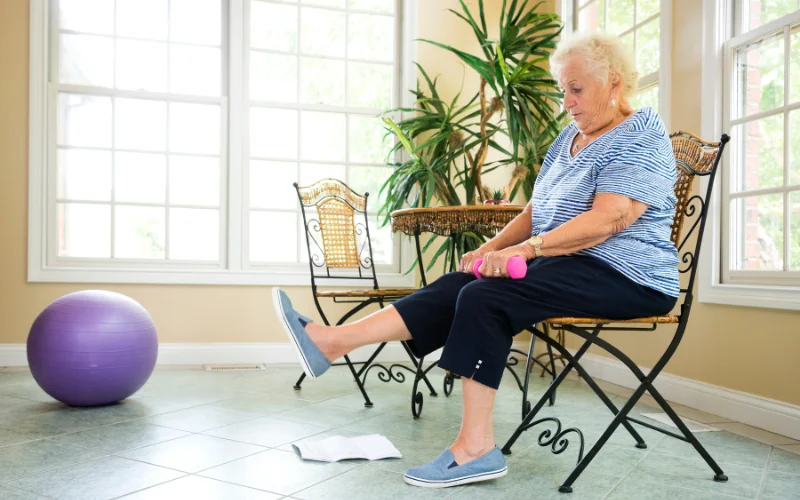
Before embarking on any exercise program, especially chair exercises for seniors, it is imperative to take certain precautions to ensure safety and maximize the benefits. While chair exercises offer a low-impact and accessible option for older adults, it’s essential to consider individual health conditions and consult with a healthcare professional before starting.
It’s important to note that chair exercises can be a great substitute for aging adults with difficulty moving around. They provide numerous benefits, such as keeping the heart healthy, preventing strokes and heart attacks, reducing the risk of falling, managing high blood pressure, and even preventing chronic diseases like dementia.
When considering chair exercises, it’s crucial to keep the following precautions in mind:
Consult with a healthcare professional
If you have any pre-existing medical conditions or recent injuries, speaking with your doctor or physical therapist before starting any exercise program is important. They can evaluate your health status and guide exercises that are safe and suitable for you.
Start slow and gradually increase intensity
Listening to your body and starting with easier exercises is essential, gradually increasing power over time. Pushing yourself too hard initially can lead to strains, injuries, or burnout. Slowly build up strength and endurance as you progress.
Maintain proper form
Proper form is crucial for effective and safe workouts. Be aware of your posture during each exercise, paying attention to alignment and engaging the correct muscles. Incorrect format can lead to strain or injury. Visual guides and step-by-step instructions are available for each exercise on reputable websites dedicated to senior fitness.
Warm-up and cool-down
Before starting any workout routine, warm up your body with gentle movements like shoulder rolls or marching in place. Similarly, after completing the exercises, cool down with some stretches to prevent muscle soreness or stiffness.
Stay hydrated
Remember to drink plenty of water before, during, and after your exercise sessions. Dehydration can cause fatigue and dizziness, so staying hydrated is important for optimal performance.
Taking these precautions and being mindful of your body’s limitations can ensure a safe and effective chair exercise program that promotes overall health and well-being.
Now that we’ve covered the important precautions before starting chair exercises let’s explore some of the best arm, leg, core, and back chair exercises designed for seniors. These exercises are targeted to strengthen various muscle groups while being performed in a seated position.
The Best Arm, Leg, Core, and Back Chair Exercises
Here are the following best arm, leg, core, and back Chair Exercises:
Seated Shoulder Press
This exercise helps extend the arms overhead with increased strength, mobility, and endurance. Sit tall in the chair with feet flat on the floor. Hold a dumbbell or resistance band in each hand at shoulder height. Extend your arms straight up overhead and then lower them back down.
Seated Front Shoulder Raises
Useful for holding objects in front of the body or extending an arm forward. With your arms by your sides and palms facing inward, hold a dumbbell or resistance band in each hand. Lift both arms forward until they reach shoulder height, then slowly lower them back down.
Seated Chest Press
This exercise targets the chest muscles, shoulders, and triceps. Sit with your back tall against the chair and hold a dumbbell or resistance band in each hand at chest level. Push both hands forward until your arms are fully extended, then bring them back towards your chest.
Seated Knee Extensions
We are strengthening the quadriceps muscles by extending the lower leg. Begin by sitting tall in the chair with feet flat on the floor. Lift one foot off the ground while keeping the knee bent at a 90-degree angle. Slowly extend the leg, straightening the knee, and then return to the starting position.
Seated Leg Curl
Targets the hamstrings by curling the lower leg towards the hips. Sit with your feet flat on the floor and knees bent. Loop a resistance band around one ankle and anchor the other end under your chair. Keeping your thigh on the chair, bend your knee, bring your heel toward your buttocks, and slowly lower it back down.
Seated Calf Raises
Works the calf muscles by raising and lowering the heels while installed. Start with both feet flat on the floor. Lift your heels as high as possible while keeping your toes on the ground, then slowly lower them back down.
Seated Russian Twist
Engages abdominal muscles by twisting from side to side while installed. Sit tall in the chair with feet flat on the floor. Hold a dumbbell or medicine ball with both hands close to your chest. Twist your torso to one side, then twist to the other side in a controlled manner.
Seated Bicycle Crunches
Works the abs and obliques by mimicking bicycle pedaling while seated. Sit tall in the chair with feet flat on the floor. Place both hands behind your head and bring one knee towards your chest as you twist to touch it with the opposite elbow—alternate sides smoothly.
Seated Row
It targets the back muscles by pulling resistance bands toward the body while seated. Sit tall in the chair with feet flat on the floor and hold onto a resistance band attached to an anchor point in front of you. Pull both arms back, squeezing your shoulder blades together, then slowly release them forward.
Seated Back Extensions
Strengthens the lower back by extending backward while established. Sit tall in the chair with feet flat on the floor and hands resting lightly behind your head. Lean back slightly, engage your core, and slowly return upright.
By incorporating these exercises into your fitness routine, you can effectively work various muscle groups while seated and reap the benefits of improved strength, flexibility, and overall physical well-being.
Maintaining Proper Form during Exercises
Maintaining proper form during chair exercises ensures safety and effectiveness and prevents strain or injury. Good shape allows you to target the intended muscles and gain maximum benefits from your workout routine. Although each exercise has specific technique and posture requirements, there are some general guidelines to remember.
First and foremost, ensure that you have a safe and stable chair before starting any exercise. Select a sturdy chair chair with a flat seat and strong back support. Avoid chairs with wheels or armrests, which may compromise stability during certain movements.
When seated, sit up straight with your feet flat on the floor and your knees at a 90-degree angle. Engage your core by drawing your navel towards your spine, and relax your shoulders away from your ears. This alignment helps maintain stability and proper posture throughout the exercises.
Let’s take the Seated Shoulder Press as an example of maintaining proper form during an exercise. Start by holding weights (dumbbells or water bottles) at shoulder level with palms facing forward. As you press the weights overhead, extend your arms fully while keeping them parallel. Throughout the movement, avoid excessive arching of the back or shrugging of the shoulders. Focus on using the shoulder muscles to perform the exercise.
For leg exercises like Seated Knee Extensions, sit tall with your back against the chair’s backrest. Place your hands on the sides of the chair for support and stability. Slowly extend one leg before you, straightening it while flexing the foot. Control the movement as you bring the leg back to the starting position without letting it drop suddenly.
Remember, maintaining proper form is all about being mindful of your body positioning throughout each exercise. Avoid using momentum or relying on other body parts to compensate for weak muscles. For instance, when performing Seated Calf Raises, focus on lifting your heels as high as possible using only your calf muscles rather than pushing off with your toes or rocking back and forth.
Maintaining proper form during chair exercises can minimize the risk of injury and ensure that you engage the targeted muscles effectively. It’s important to listen to your body and avoid any movements or positions that cause pain or discomfort. Consult a fitness professional or physical therapist for guidance on proper form and any modifications specific to your needs.
With these guidelines in mind, let’s dive into some effective chair exercises for seniors that will help improve strength, flexibility, and overall fitness levels.