
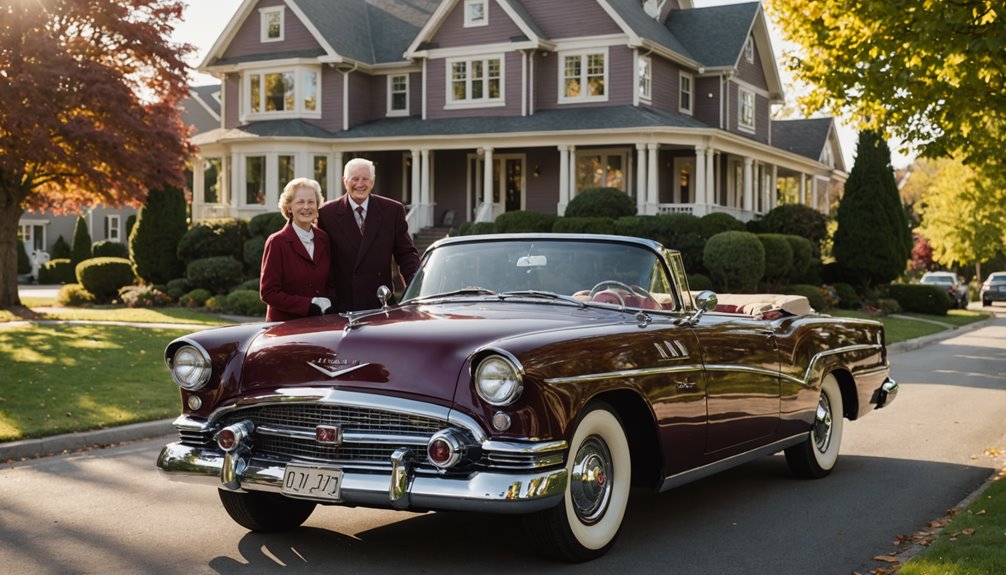
If you own a classic car, you can likely insure it for considerably less than a standard auto policy while still getting coverage that reflects its true value. Classic car insurance uses agreed value coverage, meaning you’ll receive a fixed payout with no depreciation deductions. You’ll need to meet eligibility requirements like age of vehicle, mileage limits, and proper storage. Keep going to discover everything you need to know.
Key Takeaways
- Classic car insurance typically costs seniors $200 to $600 annually, up to 40% less than standard auto insurance policies.
- Agreed value coverage locks in a fixed payout, protecting seniors from depreciation losses during a total loss claim.
- Vehicles must be at least 20 to 25 years old, stored securely, and driven only for occasional pleasure use.
- Specialized coverage protects restored parts and rare components, which standard auto policies often exclude or undervalue.
- Seniors must maintain a separate daily-use vehicle and keep annual mileage within caps of 1,000 to 5,000 miles.
What Makes a Car Eligible for Classic Car Insurance?
Not every car qualifies for classic car insurance. Insurers typically look at a combination of vehicle age, usage habits, condition, and storage before approving coverage.
Most carriers require your vehicle to be at least 25 years old, though some set the threshold at 20 or 30 years. Hagerty uses 1979 or older as its benchmark for collector cars, while Chubb accepts vehicles at least 30 years old or of limited production status.
Most insurers require classic cars to be at least 25 years old, though thresholds vary by carrier.
Beyond age, your car must be in good or restored condition, stored in a fully enclosed, locked facility, and used only for occasional pleasure driving, club events, or exhibitions.
Mileage caps typically range from 1,000 to 5,000 miles annually.
Your car also can’t serve as your primary vehicle. Most insurers require you to own a separate everyday driver.
Rarity, historical significance, or collectible value can sometimes qualify newer vehicles that don’t meet standard age requirements. Eligible vehicles span a wide range of types, including sports cars, muscle cars, and classic motorcycles.
How Classic Car Insurance Differs From Standard Auto Coverage
Once your vehicle clears the eligibility hurdles, it’s worth understanding how classic car insurance actually works compared to a standard auto policy. The differences affect valuation, usage, and cost in ways that directly benefit collectors.
| Feature | Classic Car Insurance | Standard Auto Insurance |
|---|---|---|
| Valuation Method | Agreed value (pre-set payout) | Actual cash value minus depreciation |
| Primary Use | Occasional pleasure driving, shows | Daily commuting and transportation |
| Mileage Limits | Typically 1,000 to 5,000 miles annually | No significant restrictions |
| Add-On Coverage | Spare parts, restoration, classic roadside | Standard roadside, rental reimbursement |
| Cost | Often up to 40% less | Higher due to frequent use exposure |
Because you’re driving less and storing your vehicle more carefully, insurers treat the risk differently. Agreed value coverage is especially valuable — you and the insurer lock in the payout amount upfront, so depreciation won’t reduce your settlement after a total loss.
Classic car insurance is designed for vehicles that are at least 25 years old and used exclusively as collector cars rather than everyday transportation, which is a key distinction that shapes every aspect of the coverage.
Why Classic Car Insurance Makes Sense for Seniors
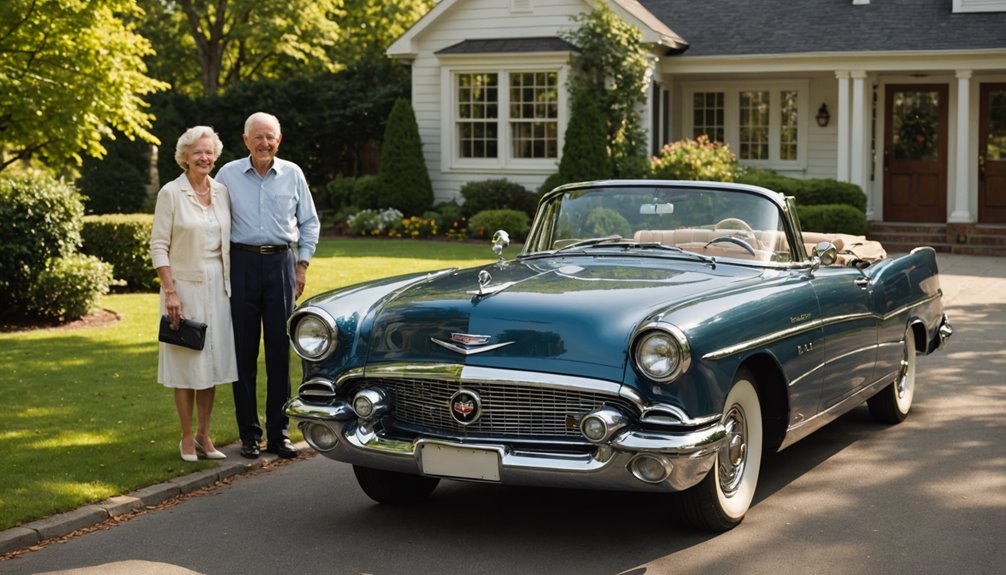
For seniors who drive less and store their vehicles carefully, classic car insurance can be a natural fit. If you’ve moved past daily commuting and use your car mainly for weekend drives, shows, or seasonal outings, classic car coverage aligns with how you actually drive.
The cost savings matter too. Annual premiums can fall between $200 and $600, and some collectors save up to 40% compared to standard policies. That’s real money when you’re on a fixed income.
You’ll also get coverage built around your vehicle’s true worth. Unlike standard insurance, which depreciates value, classic car policies protect what your car is actually worth and can be updated as that value grows.
If your vehicle includes restored parts or rare components, specialized coverage protects what standard policies often overlook.
Combined with secure storage requirements, classic car insurance supports exactly the kind of careful, low-mileage ownership most senior collectors practice. Many insurers also require climate-controlled storage spaces to help prevent rust and degradation, which aligns well with how most serious senior collectors already care for their vehicles.
Why Agreed Value Coverage Is the Core of Classic Car Insurance
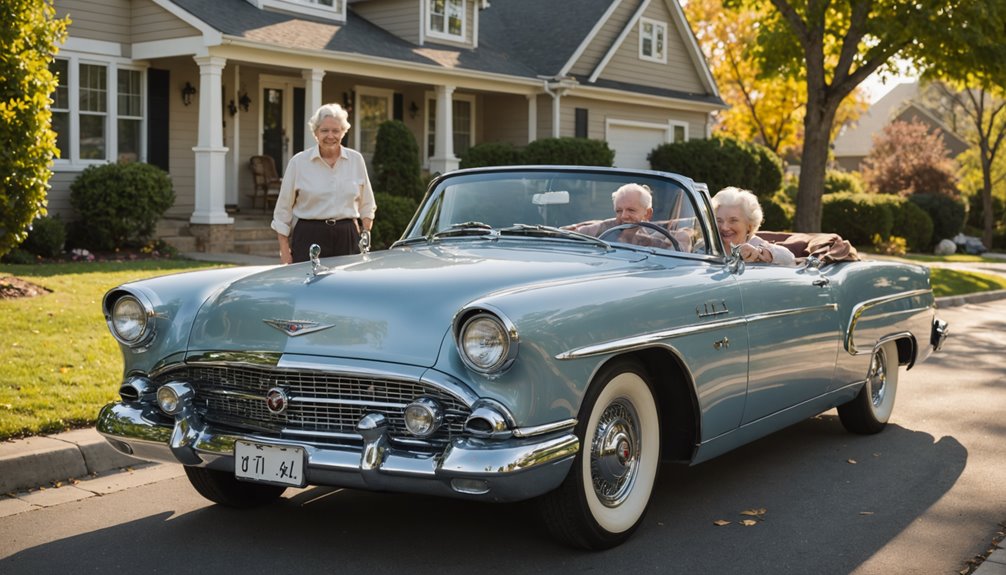
When your classic car is totaled or stolen, the last thing you want is a fight over what it was worth. Agreed value coverage eliminates that fight by locking in a fixed payout amount before your policy even starts.
Standard auto insurance pays actual cash value, which factors in depreciation. Agreed value doesn’t. The settlement amount stays fixed regardless of age-related depreciation or market shifts after you purchased the policy.
That’s a critical difference when you’re insuring a vehicle whose worth isn’t captured by standard depreciation models.
This structure also works in your favor if you’ve invested in restoration work or upgrades. You and your insurer agree on an amount that reflects the car’s actual condition, including custom paint, engine work, or suspension improvements.
If a total loss occurs, you receive the agreed amount minus your deductible, no negotiation, no guesswork. That predictability is exactly why agreed value is the foundation of classic car insurance. Your policy can also protect against rising valuations over time, with automatic value increases of up to 6% per year built into your coverage.
Does Your Classic Car Qualify for Coverage?
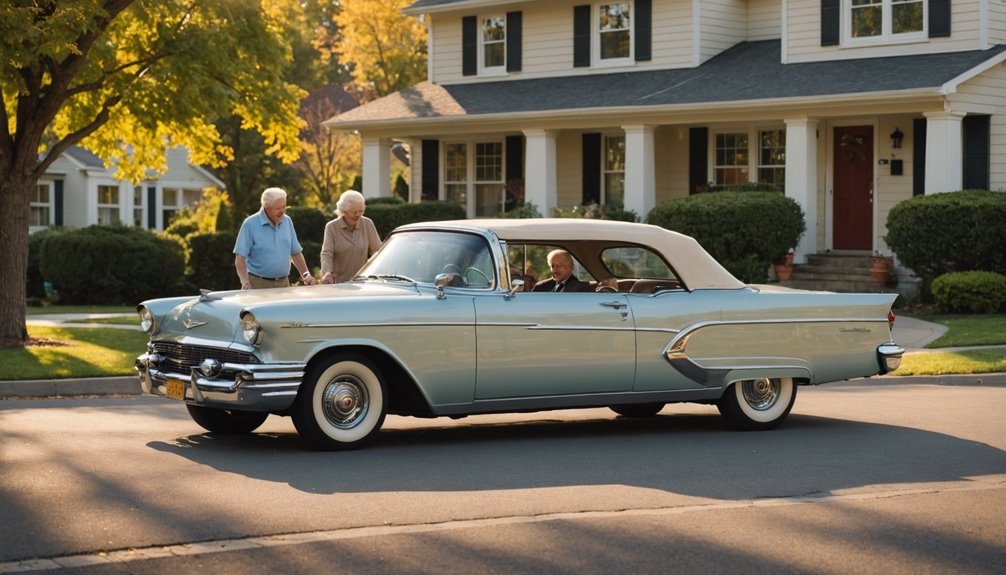
Before you purchase a classic car policy, you’ll need to confirm that your vehicle, driving habits, and storage setup all meet the insurer’s eligibility standards.
Most insurers require your car to be at least 20 to 25 years old, in restored or excellent condition, and driven only for hobby or pleasure purposes within a set annual mileage limit.
You’ll also need a valid license, a clean driving record, and a secure enclosed garage where the car stays when it’s not in use. Most programs also require drivers to have a separate daily-use vehicle for regular transportation needs.
Age and Vehicle Type
Whether your classic car qualifies for coverage depends on two key factors: your age as a driver and your vehicle’s age, type, and condition.
Most insurers require drivers to be at least 25, though the legal minimum is 18. Your vehicle typically needs to be 20 to 25 years old, though collectible value can override strict age cutoffs.
Commonly accepted vehicle types include:
- Antique and vintage cars, muscle cars, hot rods, and street rods
- Collector trucks, motorcycles, kit cars, and exotic vehicles
- Replicas and modern classics with strong collectible interest
Your car must also be in good, restored, or original condition. Insurers reject vehicles with heavy rust, significant damage, or poor paint, so maintaining your classic’s condition directly affects its eligibility.
Usage and Storage Rules
Meeting the vehicle eligibility requirements is only part of the equation — how you use and store your classic car matters just as much. Insurers expect you to drive it occasionally for pleasure, not as your primary transportation. That means no commuting, no school runs, and no daily errands.
Most policies cap annual mileage between 1,000 and 5,000 miles, and you’ll typically need a separate everyday vehicle in your household.
Storage rules are equally strict. You’ll need to keep your classic in an enclosed, locked garage with clean, dry conditions.
Ideal storage temperatures run between 60°F and 75°F, with humidity levels between 30% and 50%. Failing to meet these storage standards can put your coverage eligibility at serious risk.
Owner Eligibility Requirements
Qualifying for classic car insurance comes down to five core factors: your vehicle’s age, its condition, how you use it, where you store it, and your own driver profile.
Most insurers require you to hold a valid license, carry a personal auto policy, and have at least five years of driving experience.
Driver eligibility rules vary by carrier:
- Driving record: J.C. Taylor allows no more than one moving violation and one at-fault accident within three years.
- Age minimums: J.C. Taylor requires drivers to be at least 25 in most states, though some specialty insurers skip age restrictions entirely.
- Personal auto policy: Many carriers require you to maintain a standard auto insurance policy alongside your classic car coverage.
Spare Parts, Flatbed Towing and Other Add-Ons to Consider
Classic car insurance goes beyond collision and liability — add-ons can make a real difference when something goes wrong with a vehicle that’s irreplaceable.
If you’re keeping rare parts on hand for restoration, spare parts inventory coverage protects that investment. Hagerty offers automobilia and spare parts coverage, while Grundy covers spare parts inventory up to $500.
For towing, always look for flatbed-specific coverage. Standard tow trucks can damage low-clearance or fully restored classics.
Grundy provides towing and labor up to $250, which pairs well with its trip interruption benefit of up to $600.
If you show your car publicly, event coverage extends protection during exhibitions and parades. Some policies also cover automobilia like collector plates and hood ornaments.
Don’t overlook agreed-value coverage either, it guarantees a pre-set payout without depreciation eating into your settlement. Grundy pays 100% of agreed value with no deductible in most states. Providers like Erie Insurance are also worth reviewing, as they offer collector car programs with flexible mileage limits and agreed value options suited to senior owners.
How Much Does Classic Car Insurance Cost for Seniors?
As a senior, you’re often in a favorable position. Insurers reward clean driving records and low-mileage usage — patterns that typically match how collectors drive.
Several factors determine your exact premium:
- Vehicle type and value: Project classics average $200 to $500 per year; premium classics can hit $1,000 to $3,000 per year.
- Usage and mileage: Restricted, non-commuter driving keeps costs down considerably.
- Driving history and location: A clean record and lower-risk region reduce your rate.
Because classic policies use agreed value rather than depreciated cash value, you’ll also get more predictable, stable pricing overall. Using a platform like Insurify to compare quotes across multiple classic car insurers in one place can help seniors quickly identify the most competitive rates without calling each provider individually.
Coverage Gaps That Could Catch Senior Collectors Off Guard
If your classic car is totaled or stolen, a standard auto policy may pay only its actual cash value, which can fall far short of what your restored vehicle is actually worth.
Agreed-value coverage closes that gap by locking in a payout amount you and your insurer set upfront, supported by documentation of the car’s condition and upgrades.
You’ll also want to watch for exclusions on rare or original parts, since standard policies often won’t cover the full cost of specialty components needed to restore your vehicle correctly.
Actual Cash Value Pitfalls
When a standard insurer settles a claim using Actual Cash Value (ACV), it pays what your car is worth on the current market, not what you’ve poured into it.
Depreciation reduces that number further, even if your classic is meticulously maintained. Restoration costs, upgrades, and collector premiums rarely factor into the settlement.
This gap can leave you unable to replace the vehicle with anything comparable.
Common ACV pitfalls include:
- Depreciation overrides condition: Insurers treat older vehicles as declining assets, regardless of actual quality
- Restoration spending goes unrecognised: What you’ve invested doesn’t automatically translate to a higher payout
- Collector premiums are ignored: Rarity, provenance, and documented originality typically don’t influence ACV settlements
Without an agreed value policy, you’re exposed to a potentially significant shortfall.
Rare Parts Exclusions
Even with a solid agreed value policy protecting your classic, a separate vulnerability can quietly undermine your coverage: rare parts exclusions. Your insurer may cover the finished vehicle while leaving uninstalled components, stored spares, and restoration parts completely exposed.
Parts-specific endorsements often aren’t automatic, you’ll need to request them. If you’re storing a rare transmission, original trim set, or vintage badging outside the vehicle, standard coverage likely won’t protect those items.
Restoration-stage cars face even greater risk, since policies frequently only insure road-ready vehicles. High-value components can also exceed a limited spare-parts endorsement cap. Insurers may require documented, itemized lists for full protection.
Review your policy carefully, confirm what’s actually scheduled, and close any gaps before a loss makes the omission painfully obvious.
How Seniors Should Compare Classic Car Insurance Policies
Comparing classic car insurance policies means looking at four key areas: eligibility rules, coverage structure, cost, and usage limits. Your vehicle likely needs to be 25 years old or older, stored securely, and driven within annual mileage caps ranging from 2,000 to 7,500 miles.
On coverage, prioritize agreed value over actual cash value, since agreed value pays a pre-negotiated amount without depreciation deductions. Also confirm whether the policy covers spare parts and allows upward value revisions if your car appreciates.
Agreed value coverage pays a fixed, pre-negotiated amount, no depreciation deductions, no surprises after a loss.
Classic policies typically cost $200 to $600 annually, considerably less than standard auto insurance, which often exceeds $1,000 per year. Reviewing Auto-Owners Insurance is worthwhile for seniors, as the company consistently earns strong marks for customer service and offers classic car coverage in many states. For a broader view of your shopping options, Savvy’s insurance shopping platform can help seniors compare personalized quotes without committing to any single provider upfront.
- Eligibility: Confirm age requirements, storage conditions, and driving record lookback periods of 5 to 10 years.
- Coverage: Verify agreed value, rare parts protection, and appreciation adjustment options.
- Usage: Check mileage caps and whether a second vehicle is required for daily driving.
Frequently Asked Questions
Can a classic car policy be transferred to a family member or heir?
You can’t automatically transfer a classic car policy to a family member or heir. You’ll need insurer approval, and the new owner must qualify under the carrier’s underwriting rules before coverage continues.
Does classic car insurance cover vehicles driven by a caregiver or aide?
Your classic car policy may cover a caregiver’s driving, but only if it fits permitted use rules. You’ll want to confirm the driver’s eligibility with your insurer, as daily or commercial use likely won’t be covered.
Are there discounts available for seniors who belong to car clubs?
Yes, you may qualify for discounts if your insurer recognizes your car club as an eligible membership group. You’ll want to contact your carrier directly, provide proof of membership, and ask about combining it with other available savings.
Can classic car insurance be bundled with homeowners or life insurance policies?
You can bundle classic car insurance with homeowners insurance if your insurer offers both policies. Bundling with life insurance is possible but less common. Always compare bundled and separate quotes, as bundling doesn’t always save you money.
What happens to coverage if a senior moves to a different state?
When you move to a different state, you’ll need to update your classic car policy to meet new coverage requirements. Notify your insurer immediately, confirm registration rules, and request a fresh quote since location affects your premiums.
Conclusion
You’ve worked hard to preserve your classic car, so don’t let the wrong insurance policy put it at risk. Standard auto coverage simply won’t protect what your vehicle is truly worth. By choosing a policy built specifically for classic cars, you’re securing agreed value coverage, proper usage terms, and protections that match your collector lifestyle. Take your time comparing providers, ask the right questions, and you’ll find coverage that fits both your car and your needs.