

Imagine you’re transported back to the postwar era, witnessing the birth of a generation that would redefine the American landscape—welcome to the world of the Baby Boomers. You’re about to explore how these individuals, born between 1946 and 1964, became a driving force behind suburban sprawl, cultural revolutions, and shifting economic powers. Have you ever wondered how their upbringing in an era of prosperity and change influenced their push against traditional norms and ignited movements that still resonate today? The story of their rise and legacy is more intertwined with modern society than you might expect.
Key Takeaways
- Baby boomers were born between 1946 and 1964 during the postwar baby boom in the United States.
- The generation reshaped cultural norms and dominated the workforce, influencing American life and family dynamics.
- Suburban expansion post-WWII provided affordable housing, leading to significant demographic shifts.
- Baby boomers drove social movements like feminism, consumerism, and 1960s counterculture and activism.
- The aging of baby boomers impacts retirement systems, healthcare demand, and societal welfare challenges.
Defining the Baby Boomers

Defining the Baby Boomers involves understanding their origins and the essential role they’ve played in shaping modern society. The baby boom generation refers to individuals born during the postwar baby boom, a period following World War II. According to the U.S. Census Bureau, this generation includes those born between 1946 and 1964. Baby boomers began emerging into a world undergoing rapid change, and their sheer numbers had a profound impact on U.S. demographics.
This generation reshaped cultural norms and dominated the workforce for decades. The term “baby boom” itself gained traction after WWII, though it originally surfaced in England post-WWI. It describes the remarkable increase in birth rates during this period, marking a significant demographic swell. As a result, baby boomers became a pivotal force in numerous societal aspects.
You’ll find that baby boomers contributed significantly to civil rights movements and shaped educational systems. They also impacted the housing market and urban development. Their influence persists today as they shift into retirement, affecting healthcare and social security systems. Understanding this generation’s origins and contributions is vital to comprehending their lasting impact on society as a whole.
Birth and Growth of the Boom
The birth and growth of the baby boom were marked by a dramatic rise in birth rates from 1946 to 1964, a period that reshaped the U.S. demographic landscape. Following World War II, a sense of optimism swept across the United States. Soldiers returned home, keen to start families, leading to an unprecedented boom in births. This generation, known as baby boomers, was born during these years and is the only one distinctly recognized by the U.S. Census Bureau, highlighting its significant impact.
As a baby boomer, you were part of a massive demographic shift that influenced every aspect of American life. With millions of babies born, demand for goods and services skyrocketed. Schools expanded to accommodate growing numbers, and new cultural norms began to develop. This era wasn’t just about numbers; it was about redefining the societal landscape.
The boomers’ arrival led to changes in family dynamics, education, and eventually the workforce.
The birth of baby boomers marked a pivotal turning point, setting the stage for future cultural and economic shifts. The generation’s influence would continue to shape the United States in profound ways, long after their birth.
Moving to the Suburbs
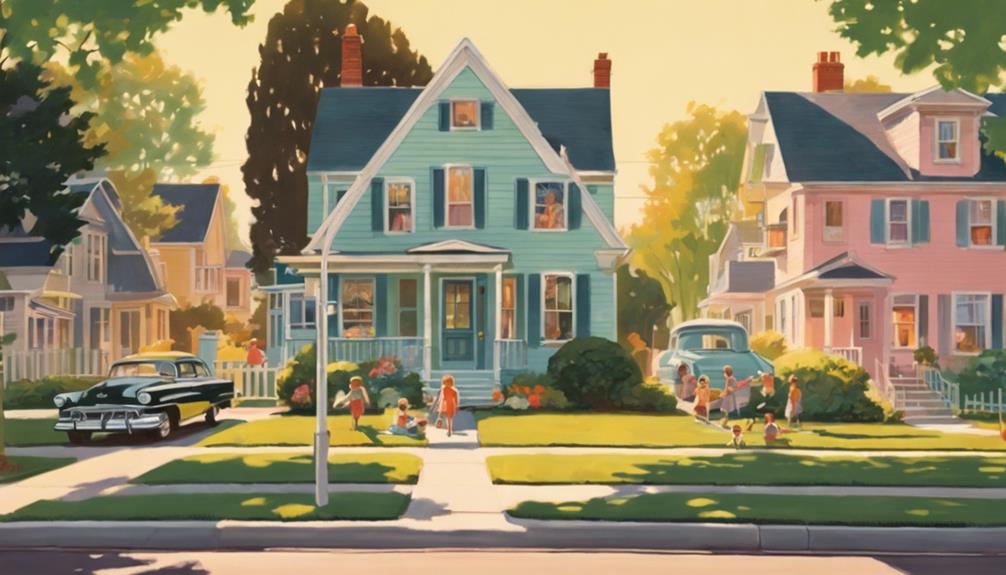
Imagine yourself in the post-WWII era, where suburban expansion was taking off with affordable homes built by developers like William Levitt. The G.I. Bill made it easier for returning soldiers to secure mortgages, drawing young families to these new communities.
Post-War Suburban Expansion
Accelerating rapidly after WWII, suburban development transformed the American landscape, fueled by the G.I. Bill. This post-war period saw an unprecedented suburban expansion as returning soldiers took advantage of government-subsidized mortgages. With the G.I. Bill making homeownership accessible, young families sought the American Dream in the form of suburban tract houses. Developers like William Levitt became key players, constructing affordable homes that catered to this burgeoning demand. These neighborhoods weren’t only a reflection of economic prosperity but also symbolized a new way of life.
By 1960, a significant shift occurred as one-third of the U.S. population lived in suburbs. This migration epitomized the post-war trend toward suburban living, driven by the promise of space, safety, and community. The flourishing suburbs became a hallmark of the baby boomer generation, shaping their upbringing and values. As manufacturers targeted baby boomers, consumerism surged, influencing everything from toys to televisions.
You saw neighborhoods sprawling with identical houses, representing a uniformity synonymous with comfort and security.
The appeal of suburban life was undeniable; it offered an environment tailored for families, aligning perfectly with the aspirations of many during this transformative era.
Family-Friendly Community Features
Embracing the allure of suburbia, young families flocked to these newly developed areas, enticed by their family-friendly features. Post-WWII, suburban development surged, offering an ideal environment for raising children. Picture spacious parks and well-equipped schools dotting the landscape—these were the staples of suburban life that attracted families craving tranquility and safety.
The shift from urban centers was monumental, with one-third of the U.S. population residing in suburbs by 1960.
Key to this transformation was William Levitt, a developer who pioneered the construction of affordable tract houses. His vision made homeownership accessible to the swelling postwar population. These homes weren’t just buildings; they represented stability and a fresh start for many returning soldiers and their families. Thanks to the G.I. Bill, mortgages were subsidized, making the dream of a suburban home achievable for veterans.
In these neighborhoods, families discovered a sanctuary from the hustle and bustle of city life. The suburbs provided a peaceful backdrop where communities could thrive. As you explore this era, you’ll see how these family-friendly features defined the baby boomer generation’s formative years, shaping their collective experience.
The Feminine Mystique
As you explore the shifting landscape of the Baby Boomer generation, Betty Friedan’s “The Feminine Mystique” emerges as a catalyst for change.
This groundbreaking book confronts the dissatisfaction many suburban housewives felt and challenges traditional domestic roles.
Women’s Domestic Roles Shift
During the postwar era, society heavily encouraged women to focus on domestic roles as wives and mothers, a notion that soon sparked widespread dissatisfaction. You probably felt the pressure to leave the workforce and embrace traditional roles, yet this shift in gender dynamics didn’t sit well with everyone. Women began questioning their limited roles, and Betty Friedan’s book, “The Feminine Mystique,” became a catalyst for change by criticizing how the suburban lifestyle stifled women’s potential. This dissatisfaction laid the groundwork for the feminist movement of the 1960s, as women sought more fulfilling lives beyond the confines of home.
Consider these pivotal shifts that emerged during this period:
- Increased Awareness: Women became more aware of the disparity between their potential and societal expectations.
- Public Dialogue: Betty Friedan’s work ignited conversations nationwide about women’s roles and their hidden dissatisfaction.
- Challenging Norms: Many women began to challenge the traditional domestic roles they were confined to, seeking educational and professional opportunities.
- Changing Dynamics: This era marked the beginning of a significant shift in gender dynamics, influencing future generations.
Feminist Movement Resurgence
Countless women in the 1960s found themselves questioning the roles society had imposed on them, sparking a resurgence of the feminist movement. You see, societal dissatisfaction was brewing as women felt confined by traditional roles and expectations. The feminist movement emerged as women sought to break free and redefine their place in society. Betty Friedan‘s groundbreaking book, “The Feminine Mystique,” criticized the suburban lifestyle that kept women in the home, igniting a fire for change. This dissatisfaction was a catalyst for women to demand social, economic, and political equality.
As the feminist movement gained momentum, women from the baby boomer generation played a pivotal role in challenging societal norms. They pushed against the boundaries that had long limited their rights and opportunities. This movement wasn’t just about achieving gender equality; it was about securing women’s rights and reshaping the future for generations to come. By advocating for change, these women set the stage for significant societal shifts.
In this era of transformation, the feminist movement reshaped the national conversation around gender equality and women’s rights, ensuring that women could aspire to more than what society traditionally offered. This movement marked a defining moment in history.
Rise of Consumerism
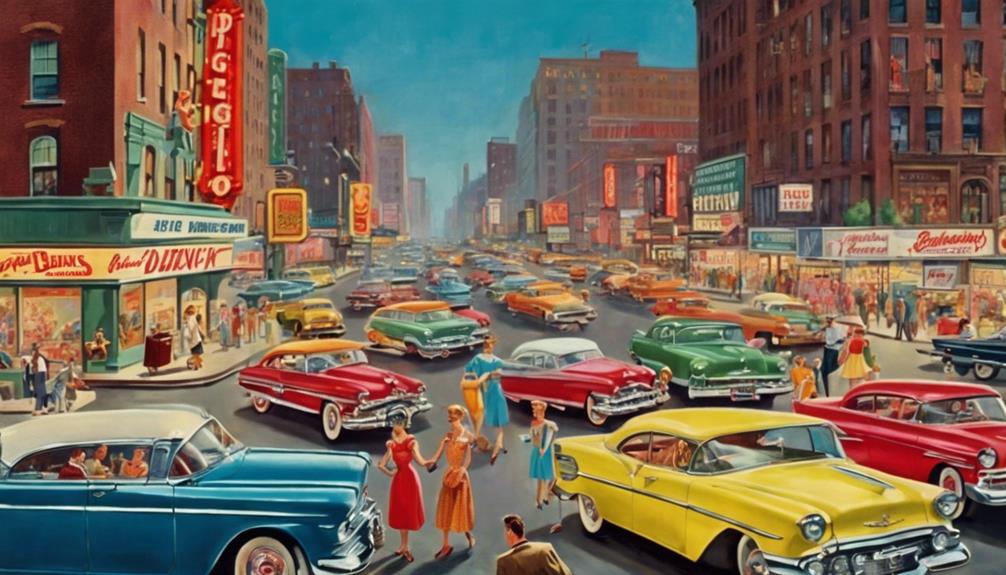
In the wake of World War II, consumerism surged as the baby boomer generation began entering the workforce, bringing with it an economic boom. This era marked a significant shift, with baby boomers becoming a key target market. Manufacturers quickly recognized their immense purchasing power, tailoring products to meet their specific preferences and desires. You could witness this in how various industries evolved, focusing on the needs of this burgeoning demographic.
Consumerism shaped the cultural and economic landscape by influencing how products were marketed and consumed. Key trends and crazes emerged, driven by the interests of the baby boomers. Consider the following impacts:
- Cultural Shifts: The rise of rock and roll became a defining feature, with music shaping identities and lifestyles.
- Toy Industry Boom: Iconic toys like Barbie dolls captivated young baby boomers, marking a new era in product marketing.
- Economic Growth: Increased consumer spending fueled the economy, leading to job creation and innovation.
- Targeted Marketing: Companies began crafting strategies specifically for baby boomers, setting the stage for modern marketing practices.
As a member of this generation, you contributed to reshaping industries and setting new trends, thereby influencing the very fabric of society.
Counterculture and Activism
Rebellion characterized the spirit of the baby boomer generation as they embraced counterculture and activism in the 1960s. You witnessed a wave of young people challenging societal norms and stepping away from mainstream consumerism. This era was marked by a significant shift where rejecting traditional values became a form of expression. Baby boomers spearheaded protests, most noticeably against the Vietnam War, questioning not only the morality of the conflict but also the broader implications of political authority.
As a member of this generation, you might’ve found yourself inspired by influential figures like Bob Dylan and Joan Baez, whose music became anthems for change. Their lyrics resonated with your desire for a more equitable society, spurring you to join marches and rallies. This collective activism drove substantial social and political transformations, leaving an indelible mark on history.
The counterculture movement wasn’t just about defying the status quo; it was about redefining what mattered to you. By rejecting mainstream consumerism, you sought authenticity and deeper connections within your community.
This period of activism and rebellion didn’t just change the world—it shaped who you became, fostering a legacy of questioning and reimagining the future.
Economic Influence
As the passion of activism and counterculture evolved, the baby boomer generation’s influence extended into the economic sphere. This cohort not only contributed to economic prosperity but also redefined investment trends and shaped retirement systems. Their substantial wealth accumulation has left an indelible mark on various industries, particularly the stock market. Let’s explore some key areas where their economic influence is most notable:
- Investment Trends: Baby boomers, with their financial prowess, have greatly influenced stock market dynamics, driving investment trends and reshaping financial markets.
- Healthcare and Insurance: Due to their large numbers, baby boomers have had a profound impact on the demand for healthcare services and insurance products, influencing social welfare policies.
- Retirement Systems: As they age, their shift into retirement highlights the need for robust pension and retirement systems, challenging existing structures to accommodate their needs.
- Wealth Transfer: The impending transfer of wealth from baby boomers to younger generations will further alter economic landscapes and impact future financial decisions.
Your understanding of these economic influences helps you grasp the broader implications of the baby boomer generation’s legacy, as their decisions continue to shape major sectors of the economy today.
Political Power and Legacy
You’ve witnessed how baby boomers dramatically increased their political influence through activism and participation in shaping policies. Their presence in Congress and the White House has led to substantial legislative contributions and reforms.
As you explore their impact, consider how their leadership continues to affect national and global policies today.
Rise in Political Influence
Amidst the shifting tides of American history, the baby boomer generation emerged as a formidable force in the political arena. Their political power was evident through their high levels of voter turnout, greatly impacting elections and policy shaping. As a generation deeply involved in political activism, baby boomers were instrumental in driving social movements from the 1960s onward. However, their dominance in politics hasn’t been without challenges, as intergenerational conflicts have surfaced, highlighting differing priorities between older and younger voters.
You can’t ignore that baby boomers have left a profound mark on American politics:
- Political Elite Presence: Baby boomers have consistently held a noteworthy presence in Congress, occupying numerous seats over the decades.
- Presidential Influence: Several U.S. presidents have emerged from this generation, showcasing their lasting impact on national leadership.
- Societal Change Agents: As parents and homeowners, they’ve driven notable societal changes, shaping the fabric of American institutions.
- Policy Influence: Their continued involvement in politics has influenced policy-making, often leading to tensions with younger generations.
Navigating these intergenerational conflicts remains important as baby boomers continue to wield considerable influence in shaping the nation’s political landscape.
Legislative Contributions and Reforms
While baby boomers‘ political influence has undeniably shaped elections and policy directions, their legislative contributions have left an indelible mark on American society. During their era, baby boomers wielded significant political power, driving legislative reforms that addressed pressing social issues. Their influence was pivotal in advancing civil rights movements, leading to landmark laws that promoted equality and justice. Their activism and determination didn’t stop there; it extended to environmental protections, resulting in significant legislation that safeguarded natural resources and addressed pollution concerns.
As part of the political elite, baby boomers saw increased representation in Congress, allowing them to push forward healthcare reforms that transformed the American healthcare landscape. Their efforts made healthcare more accessible and affordable for many, leaving a lasting impact on public health policies.
This generation’s activism and social movements were instrumental in shaping laws and regulations that continue to affect American life today.
Through their legislative contributions, baby boomers left a legacy that future generations inherit. Their role in shaping policy and legislation across a wide range of issues underscores their lasting impact, demonstrating the power of collective action and commitment to societal progress.
Presidential Impact and Leadership
Certainly, the baby boomer generation has had a significant impact on presidential leadership in the United States. As prominent figures in American politics, boomers produced influential United States presidents such as Bill Clinton, George W. Bush, and Barack Obama. These leaders wielded significant political power, guiding the nation through various societal changes and economic developments. Their presidencies were marked by impactful policy shaping that addressed key issues of their time.
Consider these contributions:
- Bill Clinton focused on economic reforms, leading to significant economic growth and reduction in federal deficits.
- George W. Bush dealt with pivotal societal changes post-9/11, influencing national security policies.
- Barack Obama championed healthcare reform, marking a substantial shift in policy shaping and societal welfare.
- Boomers in Congress played essential roles in crafting legislation that reflected the generation’s priorities and values.
Their leadership and political engagement contributed to social movements, reshaping civil rights and societal norms. As parents and homeowners, they oversaw and influenced economic developments, embedding their legacy into American institutions.
Baby boomers’ impact on presidential leadership demonstrates their enduring influence in shaping the nation’s political landscape and guiding it through transformative eras.
Impact on Retirement Systems

As the baby boomer generation reaches retirement age, their sheer numbers are starting to strain retirement systems like Social Security and pensions. You’re witnessing the impact of millions of boomers retiring, leading to increased pressure on these systems.
Social Security, a cornerstone for many retirees, is feeling the heat as it struggles to support the growing number of beneficiaries. Similarly, pension systems are facing challenges, needing to adapt to the demands of a larger retiree population.
Baby boomers’ retirement savings are also playing a pivotal role in shaping the future of these systems. With varying levels of personal savings, many are reliant on Social Security and pensions to sustain them through retirement. Furthermore, the trend of longer life expectancy is amplifying the need for effective retirement planning.
As people live longer, the funds required to support an extended retirement grow, putting additional stress on these already burdened systems.
Your choices regarding retirement age and benefit options are directly influencing the overall retirement landscape. Decisions about when to retire and how to manage benefits have a significant impact on the sustainability of retirement systems, forcing policymakers to contemplate new strategies to ensure long-term viability.
Challenges and Future Outlook
The baby boomer generation is maneuvering a complex landscape of challenges as they move into their retirement years. As a baby boomer, you’re likely concerned about whether your retirement savings will last. Rising healthcare costs add another layer of financial stress, potentially eating into your savings. Age discrimination in the workplace can hinder your ability to work longer, which many boomers choose to do. Meanwhile, caregiving responsibilities for aging parents or even grandchildren can add emotional and financial strain.
This generation’s aging population also presents broader societal issues. The impact on social welfare systems could be significant. As you age, here are four potential challenges you might face:
- Inadequate retirement savings: Many boomers haven’t saved enough to last through a lengthy retirement.
- Healthcare strain: Increased demand could overwhelm healthcare services.
- Social security pressures: An aging population means more people drawing from pension systems.
- Workforce dynamics: Your continued presence in the workforce changes policies and opportunities for younger generations.
Despite these challenges, baby boomers have a legacy of shaping intergenerational relationships and advocating for social causes, which continues to influence economic and social policies today.
Frequently Asked Questions
What Is the History of the Baby Boomers?
You’re curious about baby boomers’ history. They emerged from post-war prosperity, creating a demographic shift and economic influence. Their cultural impact paved the way for Generation X, affecting social norms and economic trends for decades.
What Were the Facts About the Baby Boom in the 1950s?
You’re looking at a postwar era population surge, driven by economic growth and changing demographics. The 1950s baby boom had a huge social impact, reshaping communities and influencing cultural norms with millions of new births.
What Are 10 Interesting Characteristics of the Baby Boomers?
You’ll find baby boomers have a strong work ethic, a profound cultural impact, and surprising technological adaptation. They’ve shown political activism, shaped retirement trends, and continue influencing society with their values, resilience, and evolving perspectives.
What Is the Timeline of the Baby Boom?
You’d look at the timeline from 1946 to 1964. During this era, post-war prosperity fueled a population explosion. Baby boomers’ cultural impact drove economic boom and social change, reshaping society with their unique perspectives and influences.
Conclusion
You’ve seen how the Baby Boomer Generation reshaped the world. From moving to the suburbs to driving the rise of consumerism, their influence is undeniable. They challenged norms and wielded significant political power, leaving a lasting impact on the economy and retirement systems. As they face new challenges, their legacy will continue to shape future generations. You’re part of a society profoundly influenced by their actions and decisions, traversing a world forever changed by their presence.