
When you’re about to rent a car, there’s more to take into account than just picking the right model. You’ve got to verify you’re equipped with a valid driver’s license and a credit card, as these are non-negotiable for most rental companies. But that’s just the beginning. It’s crucial to thoroughly inspect the vehicle for damage, check tire conditions, and confirm the presence of safety essentials. Have you thought about how your personal insurance or credit card might offer coverage? And then there’s the fine print in rental agreements and fuel policies. Are you really ready to hit the road?
Key Takeaways
- Verify that you have a valid driver’s license and a credit card for the rental process.
- Conduct a thorough exterior and interior inspection of the car for any existing damage.
- Review your personal auto insurance and credit card benefits for rental car coverage options.
- Understand the rental agreement’s terms, including mileage limits and fuel policies.
- Test drive the car to ensure there are no mechanical issues and that it is comfortable to drive.
Verify Rental Requirements

Before you rent a car, it’s crucial to verify the rental requirements to avoid any last-minute surprises. Start by confirming you have a valid driver’s license, as rental companies require this as a fundamental prerequisite.
Next, prepare a credit card in your name for the security deposit, as most rental car companies prefer this method. While some might accept debit cards, they often come with additional restrictions, so it’s best to check in advance.
Age requirements are another critical aspect to take into account. Most rental agencies set a minimum age of 21 for renters, but drivers under 25 often face extra fees due to the higher perceived risk. It’s wise to familiarize yourself with the specific policies of different rental agencies to avoid unexpected charges.
If you’re planning to have additional drivers, verify the rental agreement to see if any extra fees apply. Each registered driver typically incurs additional costs, so knowing these details upfront can help manage your budget.
Finally, review the insurance coverage options provided by the rental car company. Understanding the terms and verifying rental requirements guarantees a smooth rental experience without hidden fees or surprises.
Inspect the Vehicle
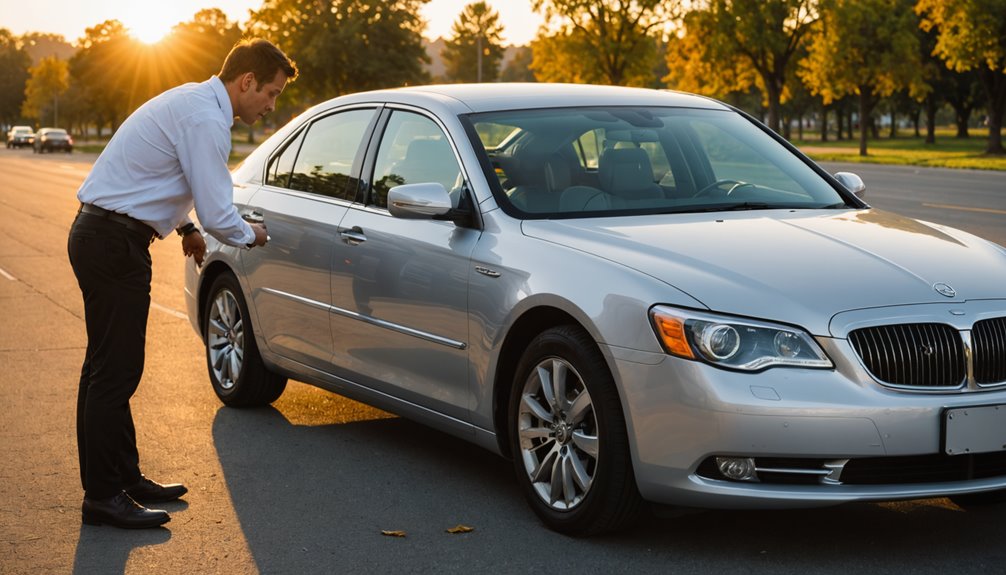
Meticulousness is key when you inspect the rental vehicle. Begin by conducting a thorough exterior inspection. Look for visible damage like scratches, dents, or chipped paint on the bumpers, doors, and roof. Document any findings with photos and notes, and share them with rental car companies before driving off. This documentation is essential to avoid any unwarranted charges later.
Move on to an interior inspection. Check for rips, tears, or stains in the upholstery. Confirm all features work properly, including dashboard controls and seat adjustments. Test all lights and signals, such as headlights, taillights, brake lights, and turn signals. They must be operational and clear to guarantee safety.
Next, inspect the tire condition. Assess the tread depth and check for proper inflation. Properly inflated tires with good tread are critical for safe driving.
In the trunk, verify the presence of essential tools, including a spare tire and jack. Familiarize yourself with the trunk release mechanism for added convenience.
Following these steps not only guarantees your safety but also protects you from unexpected issues during your rental period, providing peace of mind while on the road.
Review Insurance Options
After thoroughly inspecting the vehicle, it’s important to contemplate your insurance options to avoid any financial surprises.
First, review your auto insurance policy; it might already cover rental cars, especially if you have full coverage. This can help you avoid unnecessary car rental insurance costs. Additionally, many credit cards offer secondary rental car insurance, with some even providing primary coverage. Be sure to check the terms of your credit card benefits to see if you can save money on insurance.
Rental car companies often offer a collision damage waiver (CDW), which covers vehicle damage but usually comes with a deductible between €500 and €1,000. Consider your risk level and whether your personal insurance or credit card covers this before purchasing.
Liability insurance, protecting against third-party claims, is generally included in rental agreements. However, understand the limits and explore any additional coverage options you might need.
Lastly, consider Personal Accident Insurance (PAI), which covers medical expenses for you and your passengers in case of an accident. Compare this with your existing health insurance to determine if it’s necessary.
Understand Rental Policies
When renting a car, it’s important to thoroughly understand the rental policies to avoid unexpected charges. Start by carefully reviewing the rental agreement.
Pay close attention to mileage limits, as exceeding them can lead to additional charges. Rental companies often impose fees for this, so know your limits before hitting the road.
It’s vital to understand the fuel policy. Determine whether the rental operates on a full-to-full basis, where you return the car with a full tank, or a pre-purchase policy, where you pay for a full tank upfront. Choosing the right option can save money and hassle.
If you plan on having more than one driver, check for any additional driver fees. Many rental companies charge for each extra driver listed on the rental agreement.
Consider insurance coverage carefully. Evaluate if you need temporary car insurance or if the collision damage waiver is necessary to protect against potential vehicle damage.
Be mindful of cancellation policies. Some rental companies may charge fees for changes or cancellations after confirmation. Being informed helps you avoid surprises.
Here’s a quick checklist:
- Review mileage limits and additional charges.
- Understand fuel policy options.
- Check for additional driver fees.
Test Drive the Car
Before finalizing any car rental, take the opportunity to test drive the vehicle. This vital step guarantees you’re getting a car that meets your expectations and is free from potential issues.
Start by listening for any unusual noises like grinding or rattling, as these can signal mechanical issues. Pay attention to how the car’s brakes respond; test them in a safe area to make sure they’re smooth and effective.
Next, focus on the steering. It should feel aligned and handle well, with the car tracking straight without pulling to either side. This guarantees the car’s steering and handling are in good condition, providing you with a safer driving experience.
Acceleration is another key factor; the engine should respond promptly, with smooth power delivery and no hesitation.
Don’t overlook comfort during your test drive. Make sure the seat, controls, and driving position feel comfortable and intuitive, as this can greatly affect your overall driving experience.
Frequently Asked Questions
What to Do Before Driving a Rental Car?
Before driving a rental car, check rental insurance options, driving restrictions, and fuel policy. Confirm mileage limits, payment methods, age requirements, and credit card acceptance. For international rentals, note emergency contacts and potential cleaning fees.
What Would Prevent Me From Renting a Car?
You can’t rent a car if age restrictions apply, your credit card fails, or your driving history is poor. Guarantee insurance coverage, reservation confirmation, and identification meet rental policies. Local regulations and availability concerns might also impact you.
What Should You Check a Rental Vehicle for Before You Leave?
Before you leave, review rental agreement terms, check vehicle cleanliness, and inspect for damage. Verify tire condition, emergency kit, and interior functionality. Understand mileage limits, fuel policy, navigation usability, and insurance options to guarantee a smooth rental experience.
Should You Inspect a Rental Car?
Absolutely, inspect the rental car thoroughly. Look for exterior scratches, car damage, and previous accidents. Check tire condition, interior cleanliness, and emergency kit. Confirm mileage limits, rental insurance, fuel policy, and rental agreement details before driving off.
Conclusion
Before you drive off, make certain you’ve got everything covered. Confirm you’ve met the rental company’s requirements and thoroughly inspected the car for any damage. Don’t skip reviewing your insurance options and understanding every detail of the rental policy. If possible, take the car for a quick test drive to ascertain everything feels right. By being diligent now, you’re setting yourself up for a hassle-free rental experience. Safe travels and enjoy the ride!